Basics of Statistics in Physical Education – BPEd ( Semester IV )
Unit 1:- Introduction to Statistics
Q 1. Definition of Statistics
a) Introduction To Statistics
In Physical Education and Sports, we deal with scores, timings, distances, fitness levels, and performance records. To understand and analyze these numbers properly, we use Statistics.
👉 Statistics helps us collect, organize, analyze, and interpret data so that we can make correct decisions.
DEFINITION OF STATISTICS
Simple Definition: Statistics is the science of collecting, organizing, analyzing, and interpreting numerical data.
Classical Definitions (Easy Language):
✅ i) According to Croxton and Cowden: Statistics is the science that deals with the collection, analysis, and interpretation of numerical data.
✅ ii) According to Bowley: Statistics are numerical statements of facts placed in relation to each other.
b) Explanation In Simple Words
Statistics means:
- Collecting data → fitness scores, timings
- Organizing data → tables, charts
- Analyzing data → average, comparison
- Interpreting data → drawing conclusions
Examples Related To Physical Education
Example 1: Fitness Test
- Collect push-up scores of students
- Find the average (mean)
- Compare boys and girls
👉 This whole process is Statistics
Example 2: Sports Performance
- Record 100 m running times
- Arrange them in a table
- Identify the best and average performers
👉 Use of Statistics
Example 3: Training Program
- Measure endurance before and after training
- Compare results
- Decide whether training was effective
👉 Statistical analysis
c) Why Statistics Is Important in Physical Education
- Helps in the evaluation of performance
- Useful in player selection
- Assists in planning training programs
- Supports scientific research
- Helps in decision-making
STATISTICS IN ONE SIMPLE LINE
Statistics helps Physical Education teachers and coaches understand performance data and take scientific decisions.
d) Connection With Introduction To Statistics
| Introduction Point | Explanation |
|---|---|
| What is Statistics? | Study of numerical data |
| Why Statistics? | To understand performance |
| Use in PE | Fitness, sports, training |
| Outcome | Better decisions |
CONCLUSION: Statistics is the backbone of Physical Education research and performance evaluation, turning raw numbers into meaningful information.
Q > Need and importance of Statistics in Physical Education and Sports.
Statistics In Physical Education & Sports
Statistics is the science of collecting, organizing, analyzing, and interpreting data related to physical fitness, sports performance, health, and training.
a) 20 POINTS OF NEED OF STATISTICS
(Why Statistics is needed in Physical Education & Sports)
✅ i) Systematic Data Collection
- Statistics help to collect data properly and scientifically.
- In Physical Education, data like height, weight, timing, and scores are collected.
- Without statistics, data becomes disorganized.
- Example: Recording 100m race timings of students.
✅ ii) Organization of Large Data
- Sports data is usually large in number.
- Statistics help to arrange data in tables and charts.
- This makes data easy to understand.
- Example: Organizing fitness test results of a whole class.
✅ iii) Simplification of Data
- Statistics converts complex data into a simple form.
- Mean, graphs, and charts make understanding easy.
- Students learn faster through simplified data.
- Example: Finding the average weight of students.
✅ iv) Comparison of Performance
- Statistics help to compare the performance of players or students.
- Comparison shows improvement or decline.
- It supports fair judgment.
- Example: Comparing the jump distance of two athletes.
✅ v) Evaluation of Physical Fitness
- Fitness components are measured using statistical tools.
- It shows fitness level clearly.
- Helps in identifying fit and unfit students.
- Example: Fitness test score analysis.
✅ vi) Measurement of Training Effect
- Statistics check the effectiveness of training programs.
- Pre-test and post-test data are compared.
- Improvement is measured scientifically.
- Example: Speed improvement after training.
✅ vii) Selection of Players
- Statistics hhelpin selecting players based on performance.
- Selection becomes fair and unbiased.
- Merit gets priority.
- Example: Team selection based on timing.
✅ viii) Game Performance Analysis
- Statistics analyze game performance.
- Strengths and weaknesses are identified.
- It helps in strategy making.
- Example: Number of goals scored and missed.
✅ ix) Prediction of Performance
- Statistics help in predicting future performance.
- Records are used for analysis.
- Helps in planning training.
- Example: Predicting medal chances.
✅ x) Improvement in Teaching
- Teachers use statistics to check teaching effectiveness.
- Student performance reflects teaching quality.
- Teaching methods can be improved.
- Example: Test result comparison.
✅ xi) Research Work
- Statistics is essential for research in Physical Education.
- It helps in analysis and conclusion.
- Research becomes scientific.
- Example: Research on yoga and flexibility.
✅ xii) Control of Training Load
- Statistics help control over-training and under-training.
- Training load can be adjusted.
- Injuries are reduced.
- Example: Monitoring heart rate.
✅ xiii) Evaluation of Competition Results
- Statistics help in ranking players and teams.
- Results become clear and fair.
- Ensures transparency.
- Example: Sports meet results.
✅ xiv) Identification of Weak Areas
- Statistics highlight weak areas of performance.
- Focused training can be given.
- Overall performance improves.
- Example: Low stamina shown in the endurance test.
✅ xv) Maintenance of Records
- Statistics help maintain sports records.
- Data is stored for future use.
- Helps with reference and planning.
- Example: Annual sports records.
✅ xvi) Decision Making
- Statistics support correct decision-making.
- Decisions are based on facts.
- Reduces guesswork.
- Example: Choosing a team captain.
✅ xvii) Motivation of Students
- Statistics show progress clearly.
- Students feel motivated to improve.
- Encourages healthy competition.
- Example: Fitness improvement chart.
✅ xviii) Planning of Sports Programs
- Statistics help in proper sports planning.
- Time and resources are used effectively.
- Programs become successful.
- Example: Planning a training schedule.
✅ xix) Evaluation of Health Status
- Statistics help in checking health conditions
- BMI, pulse rate, etc., are analyzed.
- Early health issues are detected.
- Example: BMI calculation.
✅ xx) Sports AdministrationStatistics help in sports management.
- It supports planning and budgeting.
- Administration becomes effective.
- Example: Participation data analysis.
b) 20 POINTS OF IMPORTANCE OF STATISTICS
(Why Statistics is important in Physical Education & Sports)
✅ i) Scientific Foundation
- Statistics give a scientific base to Physical Education.
- All activities are measured logically.
- Results become reliable.
- Example: Fitness evaluation.
✅ ii) Accuracy in Measurement
- Statistics ensure accurate measurement.
- Errors are minimized.
- Results are trustworthy.
- Example: Accurate timing system.
✅ iii) Objective Evaluation
- Statistics removes personal bias.
- Evaluation becomes fair.
- Students trust the results.
- Example: Merit-based selection.
✅ iv) Performance Improvement
- Statistics help monitor improvement.
- Weaknesses are identified.
- Performance improves gradually.
- Example: Progress report of an athlete.
✅ v) Effective Coaching
- Coaches plan training scientifically.
- Individual training is possible.
- Performance level increases.
- Example: Strength training plan.
✅ vi) Player Development
- Statistics help in long-term player development.
- Progress is tracked regularly.
- Career planning becomes easy.
- Example: Age-wise performance chart.
✅ vii) Injury Prevention
- Statistics help prevent sports injuries.
- Training load is monitored.
- Athletes remain safe.
- Example: Monitoring workload.
✅ viii) Fair Selection Process
- Statistics ensure fair player selection.
- Talent is recognized.
- Bias is reduced.
- Example: Selection trials data.
✅ ix) Improvement of Competition Standard
- Statistics improves quality of competition.
- Ranking and scoring are clear.
- Sports become professional.
- Example: League table.
✅ x) Effective Evaluation System
- Evaluation becomes clear and systematic.
- Feedback improves performance.
- Learning becomes better.
- Example: Fitness scorecard.
✅ xi) Helpful in Research
- Statistics is the backbone of sports research.
- Results become valid.
- New knowledge is developed.
- Example: Research on endurance training.
✅ xii) Planning & Policy Making
- Statistics help in sports planning and policies.
- Decisions are data-based.
- Resources are used properly.
- Example: National sports schemes.
✅ xiii) Motivation & Goal Setting
- Statistics motivate athletes.
- Clear goals are set.
- Progress is measurable.
- Example: Target time achievement.
✅ xiv) Talent Identification
- Statistics help identify sports talent early.
- Young athletes are trained properly.
- Future champions are developed.
- Example: Junior athlete performance.
✅ xv) Game Strategy Development
- Statistics help in making game strategies.
- Opponent analysis becomes easy.
- Winning chances increase.
- Example: Match statistics.
✅ xvi) Analysis of Records
- Statistics help analyze sports records.
- New records are set.
- Performance standards rise.
- Example: Olympic records.
✅ xvii) Health Awareness
- Statistics increase health awareness.
- Fitness levels are known.
- Prevention is better than a cure.
- Example: Health survey data.
✅ xviii) Evaluation of Sports Programs
- Statistics evaluate sports programs.
- Success and failure are identified.
- Improvements are made.
- Example: School fitness program.
✅ xix) Professional Growth of Teachers
- Statistics improves professional skills of PE teachers.
- Research skills increase.
- Teaching quality improves.
- Example: Action research.
✅ xx) National Sports Development
- Statistics help in national sports development.
- Performance data guides planning.
- The country’ssports level improves.
- Example: Olympic medal analysis.
c) Comparative Summary Table
(Need vs Importance of Statistics in Physical Education & Sports)
| S.No | Need for Statistics | Importance of Statistics |
| 1 | Data collection | Scientific foundation |
| 2 | Data organization | Accurate measurement |
| 3 | Data simplification | Objective evaluation |
| 4 | Performance comparison | Performance improvement |
| 5 | Fitness evaluation | Effective coaching |
| 6 | Training evaluation | Player development |
| 7 | Player selection | Injury prevention |
| 8 | Game analysis | Fair selection |
| 9 | Performance prediction | Better competition |
| 10 | Teaching improvement | Effective evaluation |
| 11 | Research work | Research support |
| 12 | Training load control | Planning & policy |
| 13 | Result evaluation | Motivation |
| 14 | Weakness identification | Talent identification |
| 15 | Record maintenance | Strategy development |
| 16 | Decision making | Record analysis |
| 17 | Motivation | Health awareness |
| 18 | Sports planning | Program evaluation |
| 19 | Health evaluation | Professional growth |
| 20 | Sports administration | National sports development |
Q > Scope of Statistics in Physical Education & Sports
a) 20 Points Of Scope Of Statistics
✅ i) Measurement of Physical Fitness
- Statistics is used to measure physical fitness components.
- Strength, speed, endurance, and flexibility are evaluated.
- Results are recorded and compared.
- Example: Fitness test scores of students.
✅ ii) Evaluation of Sports Performance
- Statistics help to evaluate individual and team performance.
- Performance improvement or decline is identified.
- Helps in giving proper feedback.
- Example: Match performance statistics.
✅ iii) Selection of Players
- Statistics are used in the fair selection of players.
- Performance data is analyzed.
- The best performers are selected.
- Example: Selecting sprinters based on timing.
✅ iv) Talent Identification
- Statistics help identify sports talent at an early age.
- Physical and skill tests are analyzed.
- Future champions are developed.
- Example: Junior athlete performance analysis.
✅ v) Training Program Planning
- Statistics help plan effective training programs.
- Training load and intensity are decided scientifically.
- Improves performance safely.
- Example: Weekly training schedule based on data.
✅ vi) Evaluation of Training Effect
- Statistics checks whether the training is effective or not.
- Pre-test and post-test results are compared.
- Training can be modified.
- Example: Speed improvement after training.
✅ vii) Game Strategy Development
- Statistics help in planning game strategies.
- Opponent strengths and weaknesses are studied.
- Winning chances increase.
- Example: Match analysis in cricket.
✅ viii) Research in Physical Education
- Statistics is essential for research work.
- It helps in data analysis and conclusion.
- Research becomes scientific.
- Example: Research on yoga and flexibility.
✅ ix) Sports Psychology
- Statistics help study psychological factors.
- Motivation, anxiety, and confidence are measured.
- Improves mental preparation.
- Example: Anxiety level survey before competition.
✅ x) Sports Medicine & Injury Management
- Statistics help in injury analysis and prevention.
- Injury patterns are studied.
- Athlete safety improves.
- Example: Injury rate analysis in football.
✅ xi) Health Assessment
- Statistics help in evaluating health status.
- BMI, heart rate, and blood pressure are analyzed.
- Health risks are identified early.
- Example: BMI calculation of students.
✅ xii) Curriculum Planning
- Statistics help in planning the E curriculum.
- Student performance data guides planning.
- Curriculum becomes effective.
- Example: Improving syllabus based on results.
✅ xiii) Evaluation of Teaching Methods
- Statistics help evaluate teaching effectiveness.
- Student results reflect teaching quality.
- Methods can be improved.
- Example: Test score comparison.
✅ xiv) Sports Administration
- Statistics help in sports management.
- Planning, budgeting, and organization become easy.
- Administration improves.
- Example: Participation data analysis.
✅ xvi) Conduct of Sports Competitions
- Statistics help organize competitions.
- Scoring, ranking, and results are managed.
- Fair competition is ensured.
- Example: Points table in tournaments.
✅ xvi) Maintenance of Sports Records
- Statistics help maintain sports records.
- Past performances are stored safely.
- Useful for future reference.
- Example: School sports achievement records.
✅ xvii) Performance Comparison
- Statistics allow comparison between players and teams.
- Strengths and weaknesses are identified.
- Better decisions are taken.
- Example: Comparing two athletes’ timings.
✅ xviii) Policy Making in Sports
- Statistics support sports policy decisions.
- Data helps in planning programs.
- Development becomes systematic.
- Example: Government sports schemes.
✅ xix) Motivation & Goal Setting
- Statistics motivate athletes.
- Progress can be seen clearly.
- Goal setting becomes easy.
- Example: Target improvement chart.
✅ xx) National Sports Development
- Statistics help in national sports planning.
- Performance data guides improvement.
- Sports standards rise.
- Example: Olympic performance analysis.
b) SUMMARY TABLE WITH SHORT NOTES
Scope of Statistics in Physical Education & Sports
| S.No | Scope Area | Short Note |
| 1 | Physical fitness | Measures fitness components |
| 2 | Performance evaluation | Assesses performance |
| 3 | Player selection | Fair selection |
| 4 | Talent identification | Finds future talent |
| 5 | Training planning | Scientific training |
| 6 | Training evaluation | Checks effectiveness |
| 7 | Game strategy | Improves tactics |
| 8 | Research | Scientific studies |
| 9 | Sports psychology | Mental assessment |
| 10 | Sports medicine | Injury analysis |
| 11 | Health assessment | Health evaluation |
| 12 | Curriculum planning | Effective syllabus |
| 13 | Teaching evaluation | Improves teaching |
| 14 | Sports administration | Better management |
| 15 | Competitions | Fair results |
| 16 | Record maintenance | Preserves data |
| 17 | Performance comparison | Better decisions |
| 18 | Policy making | Sports development |
| 19 | Motivation | Goal setting |
| 20 | National sports | International success |
EXAM TIP
- Scope = Area of application
- Write definition + 5–6 points for short answers.
- Use examples to score a full mark
Q > Classification of Statistics
Classification Of Statistics In Physical Education & Sports
Statistics is divided into different types based on the kind of data, methods, and usage. Understanding classification helps teachers, coaches, and researchers to analyze data correctly.
a) Classification Of Statistics
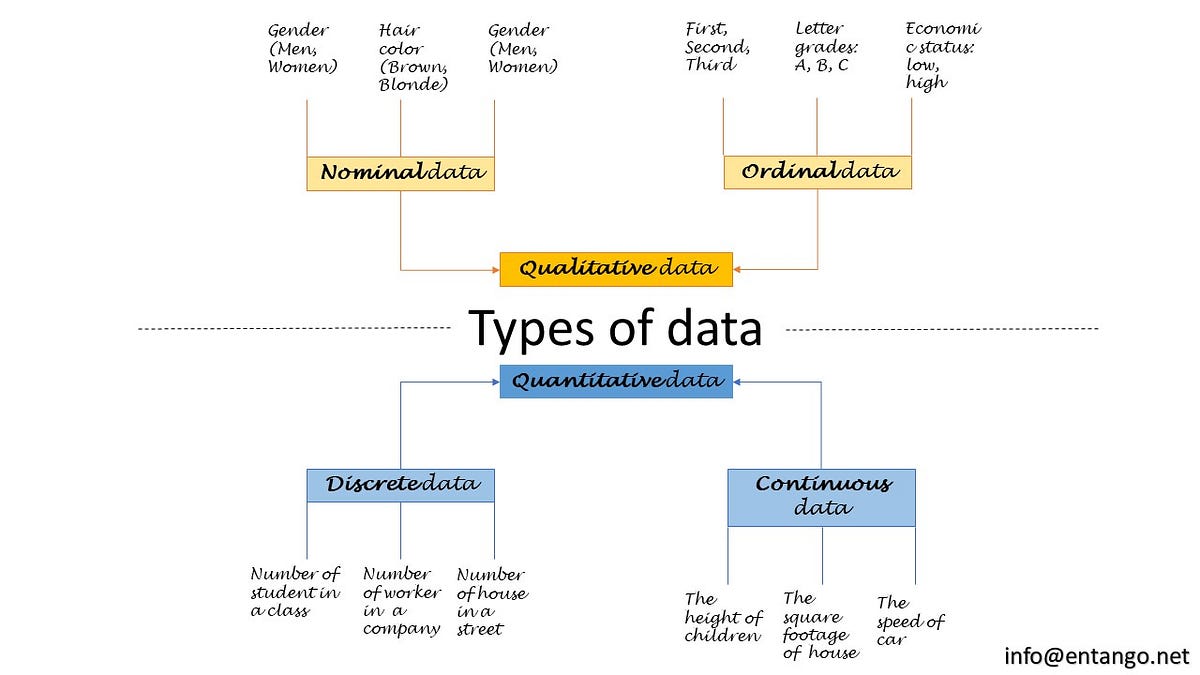
Statistics can be mainly classified into two types:
✅ i) Descriptive Statistics
- Descriptive statistics summarize and describe data.
- It tells us “what happened” without making predictions.
- Tools include mean, median, mode, graphs, tables, and charts.
- Example: Calculating the average speed of 50 sprinters in a school.
Key Uses:
- Organizes data
- Simplifies complex data
- Compares performance
✅ ii) Inferential Statistics (Analytical Statistics)
- Inferential statistics draws conclusions or predictions from sample data about a larger group.
- It tells us “what may happen” or tests hypotheses.
- Tools include t-tests, ANOVA, correlation, and regression.
- Example: Studying the effect of 6 weeks of training on endurance in a sample of 20 students to predict results for the whole class.
Key Uses:
- Prediction and forecasting
- Testing relationships
- Scientific research
Sub-Classification (Optional for Students)
| Type | Examples in Physical Education |
| Descriptive | Mean, Mode, Median, Range, Graphs |
| Inferential | t-test, ANOVA, Correlation, Regression |
b) Summary Table (Comparison)
| Feature | Descriptive Statistics | Inferential Statistics |
| Meaning | Summarizes & describes data | Draws conclusions & predictions |
| Purpose | “What happened?” | “What may happen?” |
| Tools | Mean, Median, Mode, Charts, Tables | t-test, ANOVA, Correlation, Regression |
| Usage | Organizing & comparing performance | Research, prediction & hypothesis testing |
| Example | Average height of students | Effect of training on performance |
CONCLUSION: Descriptive statistics tells us what has happened, while inferential statistics helps us predict or analyze future outcomes in Physical Education and Sports.
Q > Intervals: Raw Score, Continuous and Discrete Series, Class Distribution, Construction of frequency table
a) Intervals: Raw Score
Raw Score:
- The actual value or observation recorded in a test or measurement.
- It is unprocessed data collected directly from students or athletes.
- Example in Physical Education:
- Time taken by a student to run 100m: 14.5 seconds
- Jump distance in long jump: 2.8 meters
- Intervals:
- When we group raw scores into ranges, we call them class intervals.
- Example: If 100m sprint times are 12.0, 12.5, 13.0, … we can create intervals like 12–12.9 sec, 13–13.9 sec, etc.
Key point: Raw scores are individual observations; intervals are groups of scores.
b) Continuous and Discrete Series
✅ i) Continuous Series:
- Data that can take any value within a range.
- Usually measured, not counted.
- Example in Physical Education:
- Height of students: 165.2 cm, 170.5 cm, 172.0 cm
- Weight of athletes: 60.5 kg, 65.3 kg
- Continuous data can be divided into intervals.
✅ ii) Discrete Series:
- Data that can only take specific values.
- Usually counted, not measured.
- Example in Physical Education:
- Number of goals scored in a match: 0, 1, 2, 3
- Number of students participating in a tournament: 20, 25, 30
- Discrete data cannot be divided into smaller parts.
c) Class Distribution
Definition:
- When raw scores are grouped into classes/intervals, it forms a class distribution.
- Shows how many observations fall in each interval.
Example:
| Interval (Seconds) | Number of Students |
| 12–12.9 | 3 |
| 13–13.9 | 5 |
| 14–14.9 | 7 |
| 15–15.9 | 5 |
- Interpretation: Most students ran between 14–14.9 seconds.
Key point: Class distribution simplifies large data for easy understanding.
d) Construction of Frequency Table
Steps to Construct:
- Collect Raw Scores – Example: 12.4, 13.1, 14.8, 15.2, 13.5…
- Find Range – Range = Maximum score – Minimum score.
- Decide Class Intervals – Group scores into intervals.
- Tally Frequency – Count how many scores fall in each interval.
- Create Table – Make a clear table showing intervals and frequency.
Example:
| Interval (Sec) | Tally | Frequency |
| 12–12.9 | ||
| 13–13.9 | ||
| 14–14.9 | ||
| 15–15.9 |
- Observation: The frequency table shows how the data is distributed across intervals.
e) Summary Table
| Concept | Meaning | Example in Physical Education |
| Raw Score | Original unprocessed data | 100m sprint time = 14.5 sec |
| Interval | Grouping of raw scores | 12–12.9 sec, 13–13.9 sec |
| Continuous Series | Data that can take any value | Height = 165.2, 170.5 cm |
| Discrete Series | Data that takes only specific values | Goals scored = 0,1,2,3 |
| Class Distribution | Number of observations in each interval | 12–12.9 sec = 3 students |
| Frequency Table | Table showing class intervals and frequency | Interval vs. number of students |
🔹 Key Points to Remember:
- Raw scores → original measurements
- Intervals → grouped data
- Continuous → measurable data (height, weight, time)
- Discrete → countable data (goals, participants)
- Frequency table & class distribution → simplifies data for analysis.
Unit 2 :- Basics of Statistical Analysis
Q > Graphical Presentation of Class Distribution: Histogram, Frequency Polygon, Frequency Curve. Cumulative Frequency Polygon, Ogive, Pie Diagram
GRAPHICAL PRESENTATION OF CLASS DISTRIBUTION (In Physical Education & Sports)
Graphical presentation means showing statistical data in the form of graphs or diagrams.
Graphs make data easy to understand, compare, and remember, especially for students of Physical Education.
a) Histogram
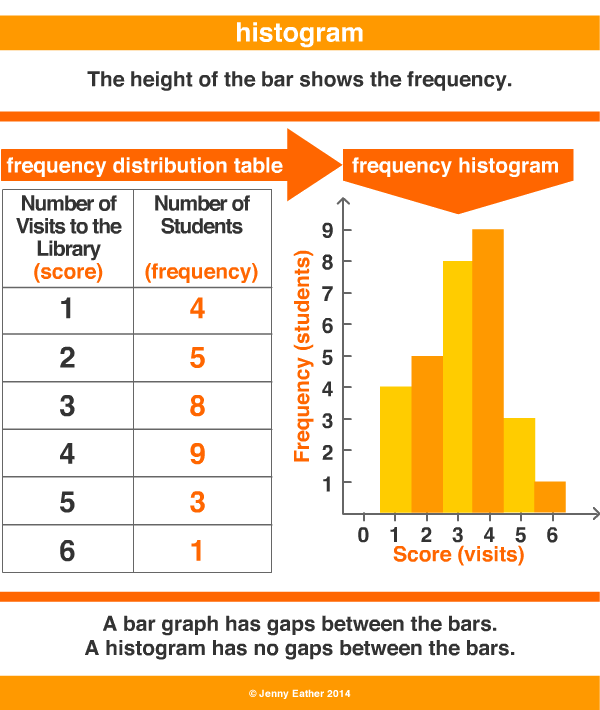
Meaning of Histogram
- A Histogram is a graph used to represent continuous data.
- It consists of rectangular bars with no gap between them.
- Class intervals are shown on the X-axis, and frequency on the Y-axis.
Use of Histogram
- Used when data is in class intervals.
- Helps to see which class has the highest frequency.
Example (Physical Education)
- Showing 100 m race timings of students:
- 12–13 sec, 13–14 sec, 14–15 sec, etc.
- The tallest bar shows the interval where the maximum number of students fall.
b) Frequency Polygon
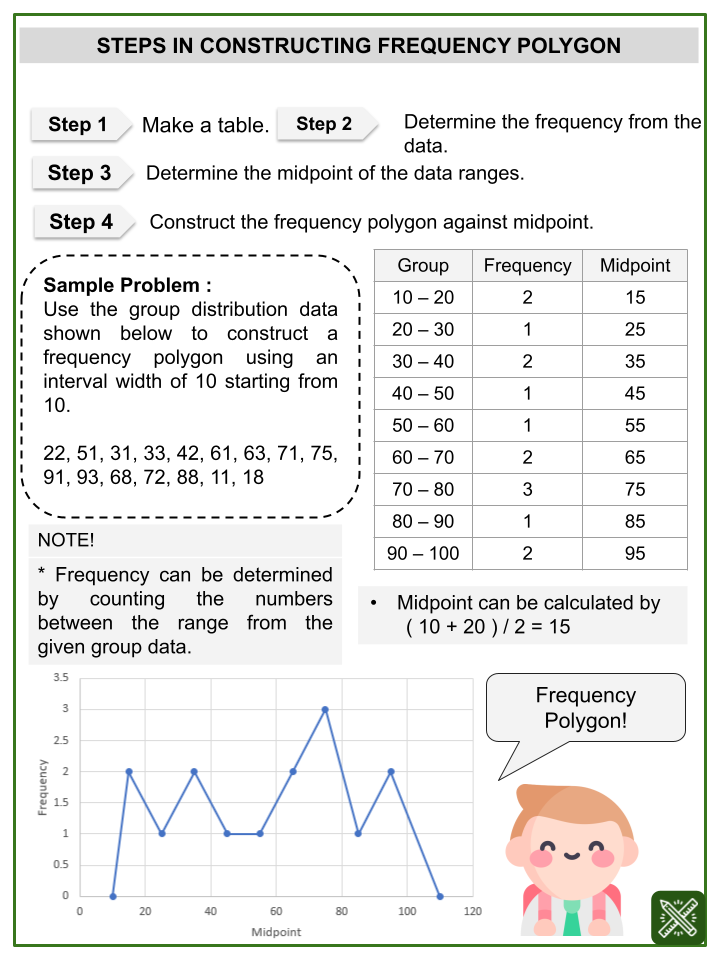
Meaning of Frequency Polygon
- A Frequency Polygon is a line graph of a frequency distribution.
- It is formed by joining the mid-points of class intervals with straight lines.
Use of Frequency Polygon
- Used to compare two or more distributions.
- Can be drawn with or without a histogram.
Example: Comparing boys’ and girls’ running performance in a 100 m race.
c) Frequency Curve
Meaning of Frequency Curve
- A Frequency Curve is a smooth curved line drawn through the points of a frequency polygon.
- It shows the overall pattern of distribution.
Use of Frequency Curve
- Helps to study the nature of data (normal, skewed).
- Used mainly in advanced analysis.
Example: Showing the general pattern of students’ fitness scores.
d) Cumulative Frequency Polygon
Meaning of Cumulative Frequency Polygon
- A Cumulative Frequency Polygon is a graph that shows cumulative frequencies.
- Frequencies are added class by class.

Use of Cumulative Frequency Polygon
- Helps to find median, quartiles, and percentiles.
- Shows how data accumulates.
Example: Total number of students scoring below a certain fitness score.
e) Ogive
Meaning of Ogive
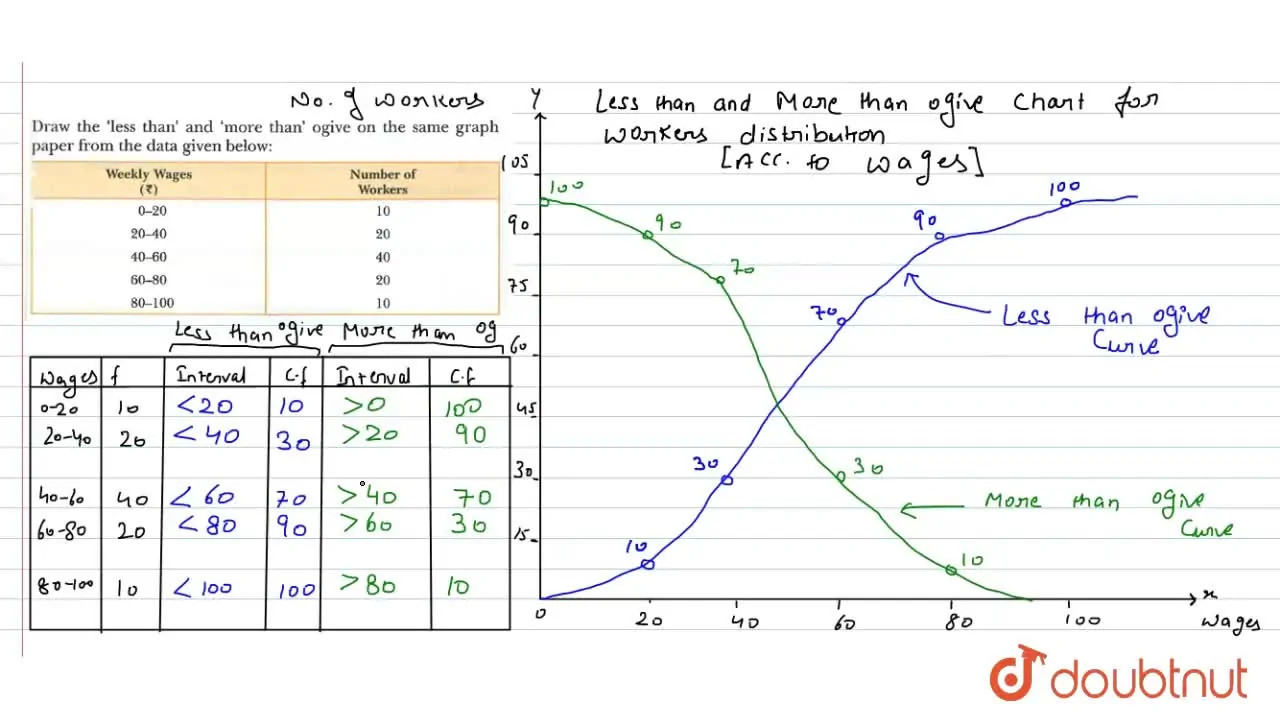
- An Ogive is a graph of cumulative frequency.
- There are two types:
- Less-than Ogive
- More-than Ogive
Use of Ogive
- Used to find the median and quartiles graphically.
- The intersection point of both ogives gives the median.
Example: Finding the median score of students in a fitness test.
f) Pie Diagram
Meaning of Pie Diagram
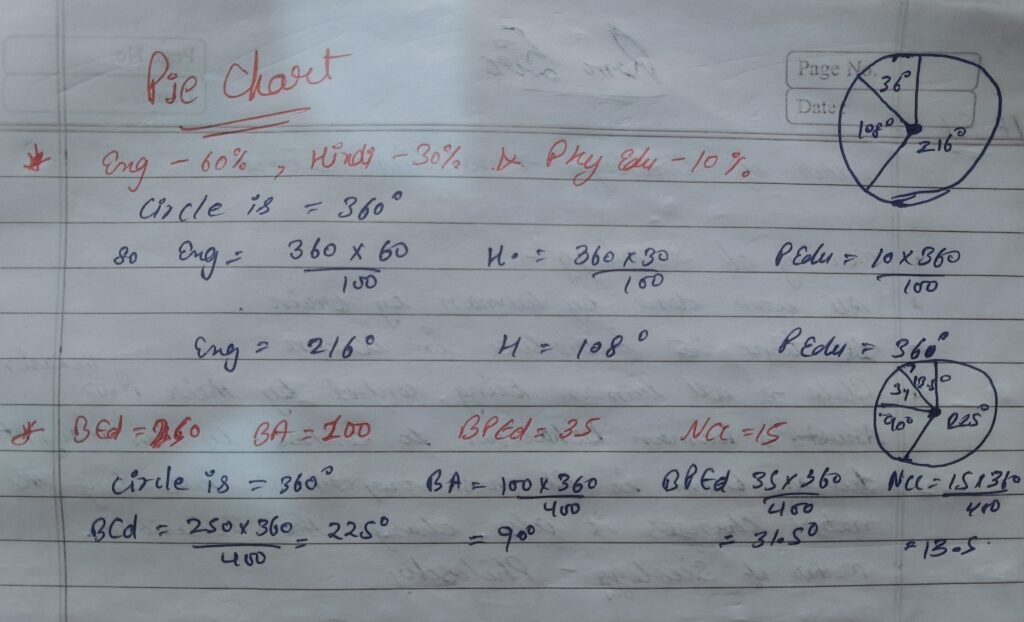
- A Pie Diagram is a circular graph.
- The whole circle represents 100% of the data.
- Each part shows the proportion of data.
Use of Pie Diagram
- Used for percentage and ratio comparison.
- Very attractive and easy to understand.
Example
- Showing the distribution of students in different sports:
- Football – 40%,
- Cricket – 30%,
- Athletics – 20%,
- Others – 10%.
g) SUMMARY TABLE
| Graph Type | Used For | Type of Data | Example in Physical Education |
| Histogram | Show class frequency | Continuous | 100 m race timings |
| Frequency Polygon | Compare distributions | Continuous | Boys vs Girls performance |
| Frequency Curve | Show data pattern | Continuous | Fitness score trend |
| Cumulative Frequency Polygon | Accumulated data | Continuous | Scores below a value |
| Ogive | Median & quartiles | Continuous | Median fitness score |
| Pie Diagram | Percentage comparison | Any (Categorical) | Sports participation |
🔑 Key Points to Remember (Exam Tip)
- Histogram → Bars without gaps
- Frequency Polygon → Straight lines
- Frequency Curve → Smooth curve
- Ogive → Cumulative frequency
- Pie Diagram → Percentage distribution
Q > Measures of Central Tendency: Mean, Median, and Mode-Meaning, Definition, Importance, Advantages, Disadvantages, and Calculation from Group and Ungrouped data
MEASURES OF CENTRAL TENDENCY (In Physical Education & Sports)
Measures of Central Tendency are statistical methods used to find one central or average value that represents the whole data. Its help us find one central value that represents the overall performance of students or athletes.
a) MEAN (Arithmetic Mean)
Meaning
- Mean is the average value of all observations.
- It is calculated by adding all values and dividing by the total number of observations.
- Mean is the most commonly used measure.
🔹 Calculation of Mean

✅ i) Mean from Ungrouped Data
- Example (100 m race times in seconds):
- 12, 14, 13, 15, 16
- Mean = (12 + 14 + 13 + 15 + 16) ÷ 5
- Mean = 14 seconds
✅ ii) Mean from Grouped Data
| Class (sec) | f | Mid-value (x) | fx |
| 12–14 | 2 | 13 | 26 |
| 14–16 | 3 | 15 | 45 |
| 16–18 | 1 | 17 | 17 |
| Total | 6 | 88 |
Mean = Σfx ÷ Σf = 88 ÷ 6 = 14.67 sec
Uses
- Shows the overall performance level
- Used in test evaluation and research
Limitation: The Mean is affected by very high or very low scores.
| SNo | Importance (Mean) | Advantages (Mean) | Disadvantages (Mean) |
| 1 | Shows the overall performance level of a group | Easy to understand | Affected by extreme values |
| 2 | Commonly used in fitness and skill tests. | Easy to calculate | Not suitable for skewed data |
| 3 | Helps in comparison between groups | Uses all values | Cannot be used for qualitative data |
| 4 | Useful in sports research | Fixed and definite value | Sometimes misleading |
| 5 | Basis for many advanced statistics | Useful for further analysis | Difficult with open-ended classes |
| 6 | Helps teachers evaluate class performance | Most popular average | Requires all values |
| 7 | Useful for norms and standards | Good for large data | Not suitable when data is irregular |
| 8 | Helps in progress tracking | Represents whole data | May not represent typical value |
| 9 | Used in training evaluation | Suitable for comparison | Time-consuming for large data |
| 10 | Supports scientific decision-making | Useful in normal distributions | Not easy to calculate mentally |
b) MEDIAN
Meaning
- Median is the middle value of the data when arranged in ascending or descending order.
- It divides the data into two equal parts.
🔹 Calculation of Median

✅ i) Median from Ungrouped Data
- Example: 18, 20, 22, 24, 26
- Median = 22
- If even values:
- 18, 20, 22, 24
- Median = (20 + 22) ÷ 2 = 21
✅ ii) Median from Grouped Data
| Class | Frequency (f) | Cumulative Frequency |
| 10–20 | 5 | 5 |
| 20–30 | 9 | 14 |
| 30–40 | 6 | 20 |
- N = 20 → N/2 = 10
- Median class = 20–30
- Median = l + (N/2–cf)÷f(N/2 – cf) ÷ f(N/2–cf)÷f × h
- = 20 + (10–5)÷9(10 – 5) ÷ 9(10–5
Uses
- Useful when data has extreme values
- Good for skewed data
Limitation: Does not use all values in the calculation.
| SNo | Importance (Median) | Advantages (Median) | Disadvantages (Median) |
| 1 | Best for skewed data | Simple to calculate | Does not use all values |
| 2 | Not affected by extreme values | Not affected by extremes | Not suitable for further calculations |
| 3 | Useful for height and weight data | Useful for open-ended classes | Less accurate than the mean |
| 4 | Shows middle performance | Good for qualitative ranking | Requires data arrangement |
| 5 | Easy to understand | Easy to locate graphically | Cannot be algebraically treated |
| 6 | Helpful in uneven distributions | Suitable for skewed data | May not represent the whole data |
| 7 | Used in fitness evaluation | Stable value | Time-consuming for large data |
| 8 | Good for comparison | Clear middle position | Not useful in advanced statistics |
| 9 | Useful when the mean is misleading. | Useful in PE tests | Depends on the order of data |
| 10 | Represents a typical value | Requires fewer calculations | Limited analytical use |
c) MODE
Meaning
- Mode is the value that occurs most frequently in the data.
- A dataset can have one mode, more than one mode, or no mode.
🔹 Calculation of Mode
✅ i) Mode from Ungrouped Data
- Example: 12, 14, 14, 15, 16
- Mode = 14
✅ ii) Mode from Grouped Data
| Class | Frequency |
| 10–20 | 6 |
| 20–30 | 12 ← Modal class |
| 30–40 | 7 |
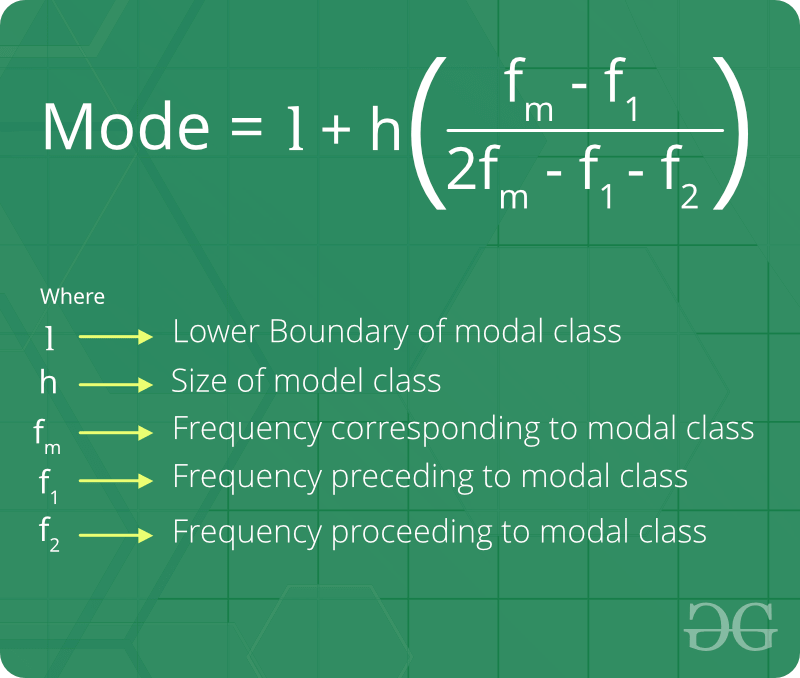
- Mode = l + (f1–f0)÷(2f1–f0–f2)(f₁ – f₀) ÷ (2f₁ – f₀ – f₂)(f1–f0)÷(2f1–f0–f2) × h
- = 20 + (12–6)÷(24–6–7)(12 – 6) ÷ (24 – 6 – 7)(12–6)÷(24–6–7) × 10
- = 25.4
Uses
- Easy to understand
- Useful for categorical data
Limitation: Sometimes, no clear mode exists.
| SNo | Importance (Mode) | Advantages (Mode) | Disadvantages (Mode) |
| 1 | Shows the most common performance | Very easy to find | May not exist |
| 2 | Useful in skill frequency analysis | No calculation needed | May have more than one value |
| 3 | Simple to understand | Not affected by extremes | Not stable |
| 4 | Useful for qualitative data | Useful for nominal data | Not based on all values. |
| 5 | Helps in grouping students | Can be found by inspection | Not suitable for further calculations |
| 6 | Not affected by extremes | Simple for students | Sometimes misleading |
| 7 | Used in sports participation data | Applicable to open classes | Not useful for small data |
| 8 | Indicates typical score | Shows popular value | Difficult in flat distributions |
| 9 | Useful for quick decisions | Useful in PE classes | Limited analytical value |
| 10 | Helps in basic comparisons | Time-saving | Not precise |
d) SUMMARY TABLE
| Measure | Meaning | Best Use | How to Find | Main Use | Main Advantage | Main Limitation | PE Example |
| Mean | Average value | Normal data | Sum ÷ Number | Overall performance | Uses all values | Affected by extremes | Avg race time |
| Median | Middle value | Skewed data | Arrange data | Skewed data | No extreme effect | Ignores some data | Middle jump |
| Mode | Most frequent value | Common score | Highest frequency | Common performance | Very simple | May not exist | Common score |
🔑 Key Points to Remember
- Mean → Arithmetic average
- Median → Middle value
- Mode → Most repeated value
Conclusion: Measures of central tendency help us understand the average performance level of students or athletes in Physical Education, teachers, and coaches.
Q > Measures of Variability: Meaning, importance, computing from group and ungroup data
MEASURES OF VARIABILITY (In Physical Education & Sports)
Meaning (Introduction)
Measures of Variability show how much the data values differ from each other or how spread out the data is around the average. While Measures of Central Tendency tell us the average, Variability tells us the consistency or uniformity of performance.
Example: Two teams may have the same average fitness score, but one team may be more consistent. Variability helps us identify this.
a) MEANING OF MEASURES OF VARIABILITY
- Measures of Variability indicate the degree of dispersion or spread of scores in a data set.
- They show whether performances are closely grouped or widely scattered.
Common Measures of Variability:
- Range
- Quartile Deviation (QD)
- Mean Deviation (MD)
- Standard Deviation (SD)
b) IMPORTANCE OF MEASURES OF VARIABILITY
- Shows consistency of performance
- Helps compare two groups with the same average
- Indicates the reliability of data
- Useful in player selection
- Helps coaches in training planning
- Identifies performance gaps
- Useful in sports research
- Shows the degree of individual differences
- Helps in the evaluation of fitness tests
- Supports scientific decision-making
c) COMPUTING MEASURES OF VARIABILITY
From Ungrouped and Grouped Data
✅ i) RANGE
- Meaning: Range is the difference between the highest and lowest values.
- Formula: Range = Highest value – Lowest value
- Example:
- Ungrouped Data
- Scores: 10, 12, 14, 16, 18
- Range = 18 – 10 = 8
- Grouped Data: Take the upper limit of the highest class – lower limit of the lowest class. Example:
- Classes: 10–20, 20–30, 30–40
- Range = 40 – 10 = 30
- Ungrouped Data
✅ ii) QUARTILE DEVIATION (QD)
- Meaning: Quartile Deviation shows the spread of the middle 50% of data.
- Formula: QD = (Q₃ – Q₁) ÷ 2
- Example:
- Ungrouped Data Example
- Data: 10, 12, 14, 16, 18, 20
- Q₁ = 12, Q₃ = 18
- QD = (18 – 12) ÷ 2 = 3
- Grouped Data
- Find Q₁ and Q₃ using the cumulative frequency table, then apply the formula.
- Ungrouped Data Example
✅ iii) MEAN DEVIATION (MD)
- Meaning: Mean Deviation is the average of the absolute deviations from the mean or median.
- Formula: MD = Σ|x – A| ÷ N
- Example:
- Ungrouped Data Example
- Data: 10, 12, 14
- Mean = 12
- MD = (|10–12| + |12–12| + |14–12|) ÷ 3
- = (2 + 0 + 2) ÷ 3 = 1.33
- Grouped Data
- MD = Σf|x – A| ÷ Σf
✅ iv) STANDARD DEVIATION (SD)
- Meaning:
- Standard Deviation is the most important and accurate measure of variability.
- It shows how much values deviate from the mean.
- Formula: SD = √(Σ(x – x̄)² ÷ N)
- Example:
- Ungrouped Data Example
- Data: 10, 12, 14
- Mean = 12
- SD = √[(4 + 0 + 4) ÷ 3]
- SD = √(2.67) = 1.63
- Grouped Data
- SD = √(Σf(x – x̄)² ÷ Σf)
- Ungrouped Data Example
d) SUMMARY TABLE
| SNo | Measure | Meaning | Formula (Simple) | Use in PE |
| 1 | Range | Difference between the highest & the lowest | H – L | Quick comparison |
| 2 | Quartile Deviation | Spread of middle 50% | (Q₃–Q₁)/2 | Consistency check |
| 3 | Mean Deviation | Avg deviation from mean | Σ|x – A| ÷ N | Performance varies widely |
| 4 | Standard Deviation | Best measure of spread | √Σ(x–x̄)²/N | Research & training |
🔑 Key Exam Points
- Central Tendency = Average
- Variability = Spread / Consistency
- Low variability = more consistent performance
- SD is the most reliable measure.
Conclusion: Measures of Variability help Physical Education teachers and coaches understand the consistency and spread of performance, not just the average.
Q > Range, Standard deviation, Quartiles, Percentiles.
What are Measures of Variability?
Measures of Variability tell us how much the scores differ from each other.
They help us understand the spread, dispersion, or consistency of performance, not just the average.
Example: Two teams may have the same average running time, but one team may be more consistent. Variability shows this difference.
a) RANGE
- Meaning: Range is the difference between the highest and lowest scores in a data set.
- Formula: Range = Highest value – Lowest value
- Example (Physical Education)
- 100 m running times (seconds):
- 12, 13, 14, 15, 16
- Range = 16 – 12 = 4 seconds
- Importance
- Very easy to calculate
- Gives a quick idea about the spread
- Useful for rough comparison
- Limitation
- Based only on two values
- Not very reliable
b) STANDARD DEVIATION (SD)
- Meaning
- Standard Deviation shows how much scores differ from the average (mean).
- It is the most accurate and important measure of variability.
- Interpretation
- Small SD → Scores are close to the mean (high consistency)
- Large SD → Scores are scattered (low consistency)
- Simple Formula
- SD = √(Σ(x − x̄)² ÷ N)
- Example (Simplified)
- Scores in vertical jump (cm):
- 40, 42, 44
- Mean = 42
- SD = √[(4 + 0 + 4) ÷ 3]
- SD ≈ 1.63
- Importance in PE
- Used in sports research
- Helps in player selection
- Shows performance consistency
c) QUARTILES
- Meaning
- Quartiles divide the data into four equal parts.
- They help understand the distribution of scores.
- Types of Quartiles
- Q₁ (First Quartile) – 25% scores below
- Q₂ (Second Quartile / Median) – 50% scores below
- Q₃ (Third Quartile) – 75% scores below
- Example
- Fitness scores:
- 10, 12, 14, 16, 18, 20
- Q₁ = 12
- Q₂ = 15
- Q₃ = 18
- Use in Physical Education
- Shows the middle spread of performance
- Useful in ranking players
d) PERCENTILES
- Meaning
- Percentiles divide the data into 100 equal parts.
- They show a person’s position in a group.
- Common Percentiles
- P10 – Bottom 10%
- P50 – Median
- P90 – Top 10%
- Example (Sports Test)
- If a student is at P80 in a fitness test,
- He/she performed better than 80% students.
- Importance of Physical Education
- Used in fitness norms
- Helpful for talent identification
- Used in grading and evaluation
e) SUMMARY TABLE
| Measure | Meaning | Key Formula | Use in Physical Education | Example |
| Range | Difference between the highest & the lowest | H − L | Quick spread check | 16 − 12 = 4 |
| Standard Deviation | Spread around the mean | √Σ(x−x̄)²/N | Consistency & research | SD = 1.63 |
| Quartiles | Divide the data into 4 parts | Q₁, Q₂, Q₃ | Ranking & distribution | Q₁=12 |
| Percentiles | Divide the data into 100 parts | P10–P90 | Norms & evaluation | P80 rank |
Conclusion: Measures of Variability help Physical Education teachers and coaches understand how consistent or scattered performances are, beyond just the average.
Unit 3 :- The Normal Distribution & Correlation
Q > Introduction, probability of an event, Binomial distribution
a) INTRODUCTION TO PROBABILITY
Meaning
- Probability means the chance or likelihood that an event will happen.
- It tells us how likely or unlikely a result is.
Value of Probability
- Probability always lies between 0 and 1
- 0 → Event will never happen
- 1 → Event will definitely happen
Example (Sports)
- Chance of winning a match
- Chance of scoring a goal
- Chance of a player getting selected
Importance of Physical Education
- Helps in predicting performance
- Useful in sports planning & strategy
- Used in research and testing
b) PROBABILITY OF AN EVENT
Meaning
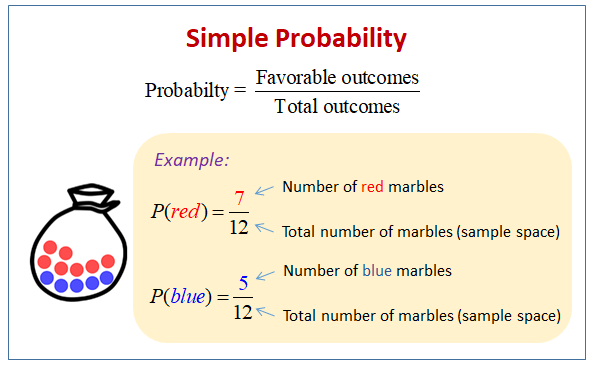
The probability of an event is the ratio of favourable outcomes to total possible outcomes.
Formula
Example 1: Simple Example
- A player takes 10 penalty shots and scores 6 goals.
- P(Goal)=610=0.6P(\text{Goal}) = \frac{6}{10} = 0.6P(Goal)=106=0.6
- 👉 Probability of scoring = 0.6 or 60%
Example 2: Toss in Sports
- A coin is tossed before a match.
- Total outcomes = 2 (Head, Tail)
Probability of Head = 1/2 = 0.5
- Total outcomes = 2 (Head, Tail)
Types of Events
- Certain Event → P = 1 (Sun rises every day)
- Impossible Event → P = 0
- Random Event → P between 0 and 1 (winning a match)
c) BINOMIAL DISTRIBUTION
Meaning
The binomial distribution is a probability distribution that deals with events having only two possible outcomes:
- Success / Failure
- Yes / No
- Win / Lose
- Goal / No Goal
Conditions of Binomial Distribution
- Fixed number of trials
- Each trial has two outcomes.
The probability of success remains constant. - Trials are independent
Formula (For Exam)
Example (Physical Education)
- A basketball player has a 70% chance of scoring a free throw.
He attempts 5 shots. - The probability of scoring exactly 3 shots can be calculated using the Binomial Distribution.
- Used to predict performance.
d) RELATION WITH NORMAL DISTRIBUTION
Connection
- When the number of trials is large,
- And the probability is moderate,
👉 Binomial Distribution becomes Normal Distribution
In Physical Education
- Large group fitness scores
- Height, weight, running time
These usually follow the Normal Distribution (bell-shaped curve).
e) RELATION WITH CORRELATION
Meaning of Correlation
- Correlation shows the relationship between two variables.
Link with Probability
- Probability helps in predicting outcomes
- Correlation helps in measuring relationship strength.
Example
- Practice time & performance
- Strength & throwing distance
- 👉 Probability predicts chance,
- 👉 Correlation measuresthe relationship
🔁 SIMPLE COMPARISON
| Concept | Use in PE & Sports | Example |
| Probability | Chance of event | Chance of winning |
| Binomial Distribution | Two outcomes | Goal / No Goal |
| Normal Distribution | Large data | Fitness scores |
| Correlation | Relationship | Training & performance |
CONCLUSION: Probability helps predict chances, Binomial Distribution handles two-outcome events, Normal Distribution explains large performance data, and Correlation shows how sports variables are related.
Q > Normal curve: Introduction, characteristics, Skewness, Kurtosis.
🔔 NORMAL CURVE (Normal Distribution Curve)
a) INTRODUCTION
Meaning
- The Normal Curve is a bell-shaped curve that represents the Normal Distribution of data.
- Most values lie near the average (mean), and fewer values lie at the extremes.
In Simple Words
- Most students perform average level
- Few perform very well or very poorly.
Example (Physical Education)
If we plot the 100 m running times of a large group of students, the graph usually forms a bell shape, called the Normal Curve.
RELATION WITH NORMAL DISTRIBUTION
- The normal curve is the graphical form of Normal Distribution
- Normal Distribution describes data mathematically.
- The normal curve shows it visually.
b) CHARACTERISTICS OF A NORMAL CURVE
- Bell-shaped and symmetrical
- Mean = Median = Mode
- The highest point is at the centre.
- The curve is symmetrical on both sides.
- Total area under curve = 1 (100%)
- The curve never touches the X-axis.s
- Most values lie near the mean.
- Shape is smooth and continuous.
- An equal number of observations on both sides
- Common in biological & sports data
Example in PE: Height, weight, reaction time, endurance, intelligence, and fitness scores usually follow a normal curve.
c) SKEWNESS
Meaning
- Skewness shows the degree of asymmetry (lack of symmetry) in a distribution.
👉 Types of Skewness

✅ i) Positive Skewness
- The tail is longer on the right side
- Mean > Median > Mode
- Example: Most students score low marks, a few score very high in a fitness test.
✅ ii) Negative Skewness
- The tail is longer on the left side.
- Mean < Median < Mode
- Example: Most students perform well, few perform poorly.
✅ iii) Zero Skewness
- Perfectly symmetrical
- Mean = Median = Mode
- Example: Ideal normal distribution of height.
d) KURTOSIS
Meaning
- Kurtosis shows the peakedness or flatness of a curve compared to a normal curve.
👉 Types of Kurtosis
✅ i) Mesokurtic
- Normal peak
- Ideal normal curve
- Example: Standard fitness scores.
✅ ii) Leptokurtic
- High and narrow peak
- Data are closely clustered.
- Example: Elite athletes with similar performance.
✅ iii) Platykurtic
- Flat and wide peak
- Data are widely spread.d
- Example: Mixed-ability students in a class.
🔗 RELATION WITH CORRELATION
- Connection
- Normal distribution helps in accurate correlation analysis
- Pearson’s correlation works best when the data is normally distributed.
- Example
- Height & weight
- Practice hours & performance
- 👉 When data follows a normal curve, correlation results are more reliable.
e) SIMPLE SUMMARY TABLE
| Concept | Meaning | PE Example |
| Normal Curve | Bell-shaped graph | Fitness scores |
| Skewness | Symmetry of data | Performance levels |
| Kurtosis | Peak of the curve | Player consistency |
| Correlation | Relationship between variables | Training & results |
CONCLUSION: The Normal Curve explains how most physical and sports performances are distributed, while skewness and kurtosis describe its shape, and correlation measures relationships within normally distributed data.
Q > Correlation: Meaning, type, merits.
a) MEANING OF CORRELATION
- Correlation means the relationship between two variables.
- It tells us how changes in one variable are related to changes in another.
- If one variable increases and the other also increases → positive relationship
- If one increases and the other decreases → negative relationship
- If no relationship exists → zero correlation
Simple Example (PE)
- Practice time and performance
- Height and weight
- Strength and throwing distance
Correlation helps us understand how strongly these variables are connected.
b) TYPES OF CORRELATION
✅ i) Positive Correlation
- When both variables increase or decrease together.
- Example:
- More practice → better performance
- Taller players → greater reach
✅ ii) Negative Correlation
- When one variable increases and the other decreases.
- Example:
- More fatigue → less performance
- Increase in body fat → decrease in speed
✅ iii) Zero (No) Correlation
- When no relationship exists between variables.
- Example:
- Shoe color and running speed
- Jersey number and fitness level
✅ iv) Perfect Correlation
- Perfect Positive: r = +1
- Perfect Negative: r = −1
- Example: Exact increase of training days and fitness score (ideal case)
c) MERITS (ADVANTAGES) OF CORRELATION
- Shows the relationship between variables
- Helps in the prediction of performance
- Useful in sports research
- Assists in training planning
- Helps coaches in decision-making
- Useful for talent identification
- Saves time and effort
- Helps in performance evaluation
- Supports scientific approach in PE
- Makes data analysis easy and meaningful
d) RELATION WITH NORMAL DISTRIBUTION
Connection Explained Simply
- Correlation works best when data follows a Normal Distribution
- Pearson’s correlation coefficient assumes:
- Data is normally distributed.
- The relationship is linear.
- Example: The height and weight of students usually follow a normal curve, So the correlation between them is accurate and reliable.
CORRELATION & NORMAL CURVE – LINK
| Concept | Role |
| Normal Distribution | Shows how data is spread |
| Normal Curve | Graphical form of distribution |
| Correlation | Measures the relationship between variables |
👉 Normally distributed data gives better correlation results.
CONCLUSION: Correlation helps Physical Education teachers and coaches understand how different physical and performance variables are related, especially when data follows a normal distribution.
Q > Product-moment correlation, Rank order method
CORRELATION (Methods)
Correlation helps us know how strongly two variables are related, such as training and performance or height and weight.
a) PRODUCT–MOMENT CORRELATION
(Karl Pearson’s Coefficient of Correlation)
- Meaning
- Product-Moment Correlation measures the degree and direction of the relationship between two continuous variables.
- It is the most commonly used correlation method.
- Symbol = r
- Value of r
- r = +1 → Perfect positive correlation
- r = −1 → Perfect negative correlation
- r = 0 → No correlation
- Formula (For Exams)
- r=Σ(x−xˉ)(y−yˉ)Σ(x−xˉ)2Σ(y−yˉ)2r = \frac{Σ(x – \bar{x})(y – \bar{y})}{\sqrt{Σ(x – \bar{x})^2 Σ(y – \bar{y})^2}}r=Σ(x−xˉ)2Σ(y−yˉ)2Σ(x−xˉ)(y−yˉ)
- Example (Physical Education)
- Variables:
- Practice hours
- Performance score
- If students who practice more score higher, the correlation will be positive.
- Example conclusion:
- r = +0.75 → High positive correlation
- Variables:
- When to Use
- Data is quantitative (numerical)
- The relationship is linear.
- Data is normally distributed.
- Importance in PE
- Used in sports science research
- Helps predict future performance
- Useful in fitness testing analysis
b) RANK ORDER METHOD
(Spearman’s Rank Correlation)
- Meaning
- Rank Order Method measures the relationship between ranks, not actual scores.
- It is used when data is in rank form.
- Symbol = ρ (rho)
- Formula
- ρ=1−6Σd2n(n2−1)ρ = 1 – \frac{6Σd^2}{n(n^2 – 1)}ρ=1−n(n2−1)6Σd2
- Where:
- d = difference between ranks
- n = number of pairs
- Example (Physical Education)
- Ranks in fitness test and sports performance:
- Small rank differences → high correlation
| Student | Fitness Rank | Performance Rank |
| A | 1 | 2 |
| B | 2 | 1 |
| C | 3 | 3 |
- When to Use
- Data is in ranks
- The distribution is not normal.
- The sample size is small.l
- Importance in PE
- Used in talent selection
- Useful when scores are unavailable
- Easy to calculate and understand
c) RELATION WITH NORMAL DISTRIBUTION
Connection Explained Simply
| Method | Relation with Normal Distribution |
| Product-Moment | Assumes normal distribution |
| Rank Order | Does not require normal distribution |
- 👉 Normally distributed data → Product-Moment is best
- 👉 Non-normal or ranked data → Rank Order is best
🔁 COMPARISON TABLE
| Point | Product-Moment (Karl Pearson) | Rank Order (Spearman) |
| Data Type | Continuous | Rank data |
| Symbol | r | ρ |
| Normal Distribution | Required | Not required |
| Accuracy | High | Moderate |
| Use in PE | Research studies | Talent ranking |
CONCLUSION: Product-Moment Correlation is best for normally distributed numerical data, while Rank Order Correlation is suitable for ranked or non-normal data in Physical Education.
Unit 4:- Significance of Test
Q > Small sample: Introduction, Student t distribution,
a) SMALL SAMPLE – INTRODUCTION
- Meaning
- A small sample is a group of observations with a small size, usually less than 30 (n < 30).
- In Physical Education research, we often work with small samples due to limited players or students.
- Why Small Samples are Used
- Difficult to get large groups of athletes
- Time and cost limitations
- Experimental training programs
- Case studies and pilot studies
- Example (Physical Education)
- A coach studies the effect of 4-week plyometric training on 12 athletes.
- Here, 12 athletes = small sample.
- Problem with Small Samples
- Results may vary more
- The normal distribution assumption may not be reliable.
- So, special statistical methods are needed
b) STUDENT’S t-DISTRIBUTION
- Meaning
- Student’s t-distribution is a probability distribution used when:
- Sample size is small (n < 30)
- The population standard deviation is unknown.n
- Data is approximately normally distributed.
- It was developed by William Sealy Gosset, who used the name “Student”.
- Shape of t-Distribution
- Similar to a normal curve
- More spread out (wider tails)
- Becomes normal distribution as the sample size increases
Types of t-Tests (For PE Exams)
- ✅ i) One-sample t-test
- Compare the sample mean with a known value
- Example: Average stamina score vs standard norm
- ✅ ii) Independent t-test
- Compare two different groups.
- Example: Boys vs girls fitness scores
- ✅ iii) Paired t-test
- Compare before and after training.
- Example: Performance before & after training
- Simple Formula
- t=xˉ−μs/nt = \frac{\bar{x} – \mu}{s/\sqrt{n}}t=s/nxˉ−μ
- Where:
- x̄ = sample mean
- μ = population mean
- s = sample standard deviation
- n = sample size
c) RELATION WITH SIGNIFICANCE OF TEST
- Meaning of Significance: A significant test tells us whether the result is real or due to chance.
- How the t-Test Shows Significance
- The calculated t value is compared with the table value.
- If calculated t > table t 👉 Result is significant
- If calculated t < table t 👉 Result is not significant
- Example (PE)
- After a training program:
- Calculated t = 2.5
- Table t (0.05 level) = 2.18
- 👉 2.5 > 2.18
- 👉 The training program is significant
🔄 LINK WITH NORMAL DISTRIBUTION
| Small Sample | Large Sample |
| Uses t-distribution | Uses normal distribution |
| n < 30 | n ≥ 30 |
| Population SD unknown | Population SD known |
👉 As the sample size increases, the t-distribution becomes a normal distribution.
CONCLUSION: In Physical Education research, small samples require Student’s t-distribution to test the significance of results and ensure that improvements are not due to chance.
Q > Student t-test (Independent)
a) INTRODUCTION / MEANING
- The Independent t-test is used to compare the means (averages) of two separate and unrelated groups to determine whether the difference between them is real or due to chance.
- The two groups must be independent, meaning no subject is common to both groups.
🔹 WHEN DO WE USE THE INDEPENDENT t-TEST?
We use the Independent t-test when:
- Sample size is small (n < 30)
- Two different groups are compared.
- Data is quantitative
- The population standard deviation is unknown.n
- Data is approximately normally distributed.
🔹 EXAMPLES IN PHYSICAL EDUCATION
- Boys vs Girls’ physical fitness scores
- Trained vs Untrained Athletes
- Urban vs Rural students’ endurance levels
- Team A vs Team B performance scores
🔹 ASSUMPTIONS (Simple)
- Groups are independent
- Data is normally distributed.
- The variance of both groups is approximately equal.
b) FORMULA (For Exam)
- t=Xˉ1−Xˉ2S12n1+S22n2t = \frac{\bar{X}_1 – \bar{X}_2}{\sqrt{\frac{S_1^2}{n_1} + \frac{S_2^2}{n_2}}}t=n1S12+n2S22Xˉ1−Xˉ2
Where:
- Xˉ1,Xˉ2\bar{X}_1, \bar{X}_2Xˉ1,Xˉ2 = Means of two groups
- S1,S2S_1, S_2S1,S2 = Standard deviations
- n1,n2n_1, n_2n1,n2 = Sample sizes
🔹 STEP-BY-STEP PROCEDURE (Very Simple)
- Find the mean of both groups
- Find the standard deviation of both groups.
- Substitute values in the formula
- Calculate t-value
- Compare with the table value of t
c) SIGNIFICANCE OF THE TEST
✅ What is Significance?
Significance tells us whether the difference between two group means is genuine or happened by chance.
✅ Decision Rule
| Condition | Result |
| Calculated t > Table t | Significant difference |
| Calculated t < Table t | Not significant |
✅ SIMPLE EXAMPLE (PE-Based)
Fitness scores of two groups:
| Group | Mean Score | n |
| Boys | 55 | 12 |
| Girls | 48 | 12 |
- Calculated t = 2.6
- Table t at 0.05 level = 2.18
- 👉 Since 2.6 > 2.18,
- 👉 Difference is statistically significant
Conclusion: Boys performed better than girls in the fitness test.
✅ LEVELS OF SIGNIFICANCE
- 0.05 level → 95% confidence
- 0.01 level → 99% confidence
Lower value = stricter test
CONCLUSION: The Independent Student t-test helps Physical Education teachers and researchers determine whether the difference between two separate groups is statistically significant or just due to chance.
Q > Paired T-Test (dependent)
a) Meaning of Paired T-Test
- The Paired t-test is used to compare the means of the same group measured at two different times or under two different conditions.
- The data are called dependent because each score in the first test is paired with a related score in the second test.
- It checks whether the change in performance is real or due to chance.
🔹 WHEN DO WE USE A PAIRED t-TEST?
We use the Paired t-test when:
- The same subjects are tested twice
- Sample size is small (n < 30)
- Data is quantitative
- The population standard deviation is unknown.
- Data is approximately normally distributed.
🔹 EXAMPLES IN PHYSICAL EDUCATION
- Fitness test before and after training
- Skill performance pre-test and post-test
- Endurance level before and after conditioning
- Flexibility test before and after yoga practice
🔹 SIMPLE ASSUMPTIONS
- Same participants in both tests
- Difference scores are normally distributed.
- Observations are related (paired)
b) FORMULA (FOR EXAM)
t=dˉsd/nt = \frac{\bar{d}}{s_d / \sqrt{n}}t=sd/ndˉ
Where:
- dˉ\bar{d}dˉ = Mean of differences
- sds_dsd = Standard deviation of differences
- nnn = Number of pairs
🔹 STEP-BY-STEP PROCEDURE (EASY)
- Find the difference (d) between pre-test and post-test scores
- Calculate the mean of differences (d̄)
- Calculate the standard deviation of differences.
- Substitute values in the formula
- Find the calculated t-value
- Compare with the table t-value
c) SIGNIFICANCE OF THE TEST
🔹What is Significance?
Significance indicates whether the improvement or decline is real or has occurred by chance.
DECISION RULE
| Condition | Result |
| Calculated t > Table t | Significant difference |
| Calculated t < Table t | Not significant |
🔹 SIMPLE PE EXAMPLE
Endurance scores of 10 students:
| Test | Mean Score |
| Before Training | 42 |
| After Training | 50 |
- Calculated t = 3.1
- Table t at 0.05 level = 2.26
- Since 3.1 > 2.26,
- Improvement is statistically significant
Conclusion: The training program effectively improved endurance.
🔹 DEGREE OF FREEDOM
df=n−1df = n – 1df=n−1
CONCLUSION: The Paired t-test helps Physical Education teachers and researchers determine whether changes in performance within the same group are statistically significant.
Q > Large sample: Z- test
a) Meaning of Z- test
- The Z-test is a statistical test used to compare averages (means) when the sample size is large.
- A large sample generally means 30 or more observations (n ≥ 30).
- The Z-test helps us decide whether the difference between means is real or occurred by chance.
🔹 WHEN DO WE USE Z-TEST?
We use the Z-test when:
- Sample size is large (n ≥ 30)
- Data is quantitative (numerical)
- Population standard deviation is known, or the sample size is large.
- Data is approximately normally distributed.
🔹 TYPES OF Z-TEST (Simple)
- One-sample Z-test – Compare sample mean with a known population mean
- Two-sample Z-test – Compare means of two large independent groups
🔹 EXAMPLES IN PHYSICAL EDUCATION
- Comparing the average fitness score of 100 students with a standard norm
- Comparing the performance of two large groups (e.g., 60 boys vs 60 girls)
- Checking the effectiveness of a training program on a large group of athletes
b) FORMULA (FOR EXAM)
✅ i) One-Sample Z-Test
Z=Xˉ−μσ/nZ = \frac{\bar{X} – \mu}{\sigma / \sqrt{n}}Z=σ/nXˉ−μ
✅ ii) Two-Sample Z-Test
Z=Xˉ1−Xˉ2σ12n1+σ22n2Z = \frac{\bar{X}_1 – \bar{X}_2}{\sqrt{\frac{\sigma_1^2}{n_1} + \frac{\sigma_2^2}{n_2}}}Z=n1σ12+n2σ22Xˉ1−Xˉ2
Where:
- Xˉ\bar{X}Xˉ = Sample mean
- μ\muμ = Population mean
- σ\sigmaσ = Population standard deviation
- nnn = Sample size
🔹 STEP-BY-STEP PROCEDURE (EASY)
- State null hypothesis (H₀)
- Choose the level of significance (0.05 or 0.01)
- Calculate the Z-value using the formula.
- Compare with the table Z-value.
- Draw conclusion
c) SIGNIFICANCE OF THE TEST
Meaning: Significance tells us whether the difference observed is genuine or due to chance.
DECISION RULE
| Level of Significance | Table Z-Value |
| 0.05 level | ±1.96 |
| 0.01 level | ±2.58 |
| Condition | Decision |
| Calculated Z > Table Z | Significant |
| Calculated Z < Table Z | Not Significant |
🔹 SIMPLE PE EXAMPLE
- A fitness norm says the average endurance score should be 50.
- From a sample of 60 students:
- Mean score = 53
- SD = 6
- Calculated Z = 2.2
- Table Z (0.05) = 1.96
- Since 2.2 > 1.96,
- The result is statistically significant
Conclusion: Students’ endurance is better than the norm.
🔹 RELATION WITH NORMAL DISTRIBUTION
- The Z-test is based on the Normal Distribution
- Z-scores measure how far a value is from the mean in standard units.
- Large samples follow the normal curve due to the Central Limit Theorem.
📌 CONCLUSION
The Z-test is used in Physical Education research to test the significance of results when the sample size is large and the data follow a normal distribution.