Foundation and Principles of Physical Education – BPEd ( Semester IV )
Unit 1:- Introduction to Physical Education
Q > Concept basic to the nature & meaning of Physical education
a) Meaning of Physical Education (PE)
Physical Education is the process of developing the body and mind through physical activity. It’s not just playing games or sports—it’s about improving fitness, health, skills, and overall personality.
Simple definition: Physical Education is education through physical activities to develop fitness, skills, and overall growth of a person.
Example: A student learns running, jumping, and throwing in school PE class. These activities make the student physically fit, teach discipline, teamwork, and improve confidence.
b) Concept of Physical Education
The concept of PE involves understanding that the body and mind are connected. PE focuses on:
- Physical development: Strength, endurance, flexibility, coordination.
- Mental development: Discipline, focus, concentration, confidence.
- Social development: Teamwork, cooperation, leadership, sportsmanship.
Example: Playing volleyball helps students build arm strength (physical), focus on the game (mental), and work together with teammates (social).
c) Nature of Physical Education
The nature of PE describes its key characteristics:
- Holistic Development: PE develops the body, mind, and personality together.
- Activity-Oriented: Learning happens by doing physical activities, not just theory.
- Scientific Basis: PE uses knowledge of anatomy, physiology, psychology, and biomechanics.
- Lifelong Benefit: PE encourages habits that keep people fit and healthy for life.
- Discipline and Character Building: PE teaches self-control, teamwork, and fair play.
Example: A 15-minute morning yoga session teaches breathing (physical), improves concentration (mental), and develops patience (character).
d) Importance of Physical Education
- Improves physical health and fitness
- Enhances mental health and reduces stress
- Develops motor skills and coordination
- Builds social skills and teamwork
- Encourages a healthy lifestyle
Example: Students who play daily football not only improve heart health (physical) but also learn to communicate and support teammates (social & mental).
e) Summary Table:
| Aspect | What it Means | Example |
| Physical | Body fitness and skill development | Running, jumping, throwing |
| Mental | Focus, discipline, confidence | Concentrating on yoga |
| Social | Teamwork, leadership, cooperation | Playing volleyball or football |
| Holistic Development | All-round personality growth | PE class activities |
| Lifelong Benefit | Healthy lifestyle habits | Daily exercise routines |
In short, Physical Education is learning through physical activity, which makes a person healthy, skilled, disciplined, and socially active.
Q > What is an Aim? What are the objectives? What are Outcomes?
a) AIM
An aim is the broad, general purpose or goal that you want to achieve. It’s like the big picture of what you are trying to do.
Simple definition: Aim is what you want to achieve in the long run.
Example in Physical Education:
- Aim of a school PE program: “To develop students’ physical fitness, motor skills, and overall personality.”
- Aim of a yoga class: “To improve flexibility, mental calmness, and overall health.”
- Remember: The aim is a general, long-term, and overall goal.
b) Objectives
Meaning: Objectives are the specific, clear, and measurable steps that help you achieve the aim. They break the aim into smaller parts.
Simple definition: Objectives are the specific things you want students to learn or achieve.
Example in Physical Education:
If the aim is “To develop students’ fitness.”
- Objective 1: Students will increase their running stamina.
- Objective 2: Students will learn correct techniques of throwing and catching.
- Objective 3: Students will develop teamwork skills through games.
- Remember: Objectives are specific, measurable, and short-term goals.
c) Outcomes
Outcomes are the results or changes that happen after achieving the objectives. They show what the students actually learned or gained.
Simple definition: Outcomes are the results of teaching and training.
Example in Physical Education: After following the objectives –
- Students can run 1 km without getting tired.
- Students can throw and catch a ball correctly.
- Students can play a team game and cooperate well.
- Remember: Outcomes show the actual achievements after teaching or training.
d) Summary Table
| Term | Meaning | Example in PE |
| Aim | General goal or purpose | Develop students’ overall fitness and personality |
| Objectives | Specific, measurable steps to achieve the aim | Learn running, throwing, catching, and teamwork |
| Outcomes | Results or achievements after teaching | Can run 1 km, throw/catch correctly, cooperate in games |
In short:
- Aim = “What I want to achieve overall.”
- Objectives = “Steps to reach that aim.”
- Outcomes = “What the students actually learn or achieve.”
Q > Goal of Education, Aim & objectives of Education
a) Goal of Education
The goal of education is the ultimate purpose of educating someone. It is very broad and long-term, focusing on the overall development of a person.
Simple definition: The goal of education is to develop a person physically, mentally, socially, and morally.
Example in Physical Education:
- Goal: To make students healthy, physically fit, disciplined, and socially responsible.
- Remember: Goal = “Big picture” or final purpose of education.
b) Aim of Education
An aim is a broad statement about what we want to achieve in a particular course or subject. It is more specific than the goal but still general.
Simple definition: Education aims to guide the teaching and learning process toward the goal.
Example in Physical Education:
- Aim: To develop students’ physical fitness, motor skills, and overall personality through physical activities.
- Remember: Aim = “General target or purpose of a program or subject.”
c) Objectives of Education
Objectives are specific, clear, and measurable steps that help achieve the aim. They are short-term targets.
Simple definition: Objectives are specific things that students should be able to do after learning.
Example in Physical Education: If the aim is “To develop students’ physical fitness.”
- Objective 1: Students will be able to run 1 km without fatigue.
- Objective 2: Students will be able to perform basic yoga postures correctly.
- Objective 3: Students will work together in team games.
- Remember: Objectives = “Specific steps or achievements toward an aim.”
Simple Diagram
Goal of Education (Broad, ultimate purpose)
↓
Aim of Education (General target for a course or subject)
↓
Objectives of Education (Specific, measurable steps to achieve the aim)
d) Summary Table
| Term | Meaning | Example in PE |
| Goal | Ultimate purpose of education | Develop healthy, disciplined, socially responsible students |
| Aim | The general purpose of a course or program | Develop physical fitness, motor skills, and personality |
| Objectives | Specific, measurable steps to achieve the aim | Run 1 km, perform yoga postures, and play team games |
In short:
- Goal = Why we educate (broad purpose).
- Aim = What we want to achieve in a program or subject.
- Objectives = How we measure what students actually achieve.
Q > Aim, Objectives & Goal of Physical Education
a) Aim of Physical Education
The aim of Physical Education is the general purpose or broad target of PE. It is what we want to achieve through PE activities. Aim with Explanation and Example:
- Physical Fitness Development – Aim to improve strength, endurance, and stamina.
Example: Running and strength exercises in PE class. - Flexibility Improvement – Aim to make muscles and joints flexible.
Example: Stretching and yoga postures. - Motor Skill Enhancement – Aim to improve coordination and control of body movements.
Example: Drills in throwing, catching, and balancing. - Mental Growth – Aim to develop concentration, focus, and alertness.
Example: Meditation or yoga during PE class. - Health Promotion – Aim to encourage a healthy lifestyle and reduce diseases.
Example: Regular aerobic exercises to strengthen the heart. - Discipline Development – Aim to make students follow rules and routines.
Example: Warm-up sessions and respecting game rules. - Social Skills – Aim to improve interaction and cooperation with peers.
Example: Playing team games like volleyball or football. - Leadership Qualities – Aim to develop leadership and decision-making skills.
Example: Leading a group in relay races. - Teamwork Promotion – Aim to encourage working together toward a goal.
Example: Passing drills in basketball. - Confidence Building – Aim to increase self-esteem and courage.
Example: Performing in a school sports competition. - Stress Reduction – Aim to reduce anxiety and mental fatigue.
Example: Recreational games and yoga. - Character Development – Aim to teach honesty, integrity, and responsibility.
Example: Playing fair in sports competitions. - Lifelong Physical Activity – Aim to encourage regular exercise beyond school.
Example: Interest in jogging or swimming after school. - Posture and Body Mechanics – Aim to improve posture and body alignment.
Example: Correct sitting, running, or standing posture exercises. - Fun and Enjoyment – Aim to make PE enjoyable and engaging.
Example: Fun games like dodgeball or tug-of-war. - Sportsmanship – Aim to develop respect for opponents and fair play.
Example: Congratulating the opposing team after a game. - Motor Coordination – Aim to improve eye-hand and eye-foot coordination.
Example: Drills in catching and passing the ball. - Preparation for Physical Challenges – Aim to make students ready for physical activities in life.
Example: Adventure activities like trekking or swimming. - Cultural and Social Awareness – Aim to teach respect for cultural sports and games.
Example: Learning traditional Indian games like kabaddi or kho-kho. - Holistic Development – Aim to develop body, mind, and personality together.
Example: Yoga and team games combined in PE lessons.
b) Objectives of Physical Education
Objectives are specific, measurable steps to achieve the aim. They focus on what students can do after PE lessons. Objectives with Explanation and Example:
- Run 1 km without fatigue.
- Perform 5 basic yoga postures correctly.
- Improve muscle strength through push-ups or pull-ups.
- Enhance flexibility with stretching exercises.
- Improve speed in short-distance running.
- Learn to throw and catch a ball accurately.
- Develop balance and coordination through drills.
- Follow team game rules properly.
- Demonstrate leadership in team activities.
- Show discipline during warm-ups and exercises.
- Improve reaction time in games.
- Apply strategies in team sports.
- Track personal fitness improvements over time.
- Participate actively in recreational games.
- Demonstrate fair play and sportsmanship.
- Develop endurance for long activities.
- Show confidence while performing tasks.
- Maintain correct posture during exercises.
- Cooperate and work effectively in teams.
- Adopt healthy habits like daily exercise and a proper diet.
Example: After completing a PE program, a student should be able to run 1 km, perform yoga, play volleyball, and follow healthy lifestyle habits.
c) Goal of Physical Education
The goal is the ultimate purpose or outcome of Physical Education. It is broad, long-term, and all-encompassing. Goal with Explanation and Example:
- Promote overall physical health – strong heart, lungs, muscles.
- Encourage mental alertness and concentration.
- Develop social interaction and teamwork.
- Teach discipline and self-control.
- Build confidence and self-esteem.
- Encourage lifelong participation in sports.
- Reduce stress and anxiety.
- Promote fair play and ethical behavior.
- Improve motor coordination and body control.
- Enhance strength, stamina, and endurance.
- Prepare students for real-life physical challenges.
- Develop leadership and decision-making skills.
- Teach responsibility and accountability.
- Foster cultural awareness through traditional games.
- Improve posture and body alignment.
- Encourage fun and enjoyment in physical activities.
- Promote social and emotional growth.
- Improve reaction time and agility.
- Contribute to overall personality development.
- Encourage healthy lifestyle habits for life.
Example: A student, after PE classes, becomes fit, disciplined, confident, socially active, and interested in lifelong physical activity.
d) Summary Table (Comparison of Aim, Objectives, Goal)
| Feature | Aim of PE | Objectives of PE | Goal of PE |
| Meaning | General target of PE | Specific measurable steps to achieve the aim | Ultimate purpose or outcome of PE |
| Focus | Broad development of fitness and personality | What students can actually do | Overall health, growth, and lifelong benefits |
| Time Frame | Medium to long-term | Short-term | Long-term |
| Nature | General and conceptual | Specific and practical | Broad and comprehensive |
| Example | Improve fitness, teamwork, and confidence | Run 1 km, perform yoga, play volleyball | Fit, disciplined, confident, socially active student |
| Measurability | Less measurable | Measurable | Indirectly measured through overall development |
| Scope | Wide | Narrow, focused | Very wide, holistic |
| Role in PE | Guides program planning | Guides lesson planning and assessment | Justifies the existence of PE |
| Emphasis | Physical, mental, and social skills | Skills, fitness, discipline | Holistic development |
| Outcome | General improvement | Observable skills and behaviors | Overall personality, fitness, and social growth |
In short:
- Goal = Why we do PE (ultimate purpose).
- Aim = What we want to achieve (broad target).
- Objectives = How we measure it in specific steps.
Q > The physically educated person.
a) The Physically Educated Person
A physically educated person is someone who has learned physical skills, keeps the body fit, understands health, and uses physical activity as a part of daily life.
Such a person is not only strong but also mentally alert, socially responsible, and disciplined.
Simple Definition: A physically educated person knows the importance of physical activity, participates regularly, stays healthy, and shows good behavior and attitude in life.
b) Main Characteristics of a Physically Educated Person
1. Physically Fit
- The person has good strength, endurance, flexibility, and stamina.
- They can perform daily activities without getting tired easily.
- Example:
- A student can run, jump, climb stairs, and play games comfortably.
2. Skilled in Physical Activities
- The person has learned basic motor skills like running, throwing, catching, balancing, and coordination.
- Example:
- A student can throw and catch a ball correctly during a game.
3. Regularly Active
- A physically educated person participates in physical activities regularly, not only in school but throughout life.
- Example:
- Doing a morning walk, yoga, or playing games daily.
4. Knowledge of Health and Fitness
- The person understands exercise, nutrition, hygiene, and rest.
- Example:
- Choosing healthy food and knowing the importance of warm-up and cool-down.
5. Mentally Healthy
- Physical activity helps the person stay stress-free, confident, and focused.
- Example:
- A student feels relaxed and fresh after playing or doing yoga.
6. Socially Responsible
- The person shows teamwork, cooperation, and respect for others.
- Example:
- Playing fairly in a football match and helping teammates.
7. Disciplined and Self-Controlled
- A physically educated person follows rules, routines, and discipline.
- Example:
- Reaching the playground on time and following game rules.
8. Shows Sportsmanship
- The person accepts wins orlossess positively and respects opponents.
- Example:
- Congratulating the other team after losing a match.
9. Positive Attitude Toward Life
- Physical education develops a positive mindset and confidence.
- Example:
- Trying again after failure instead of giving up.
10. Lifelong Learner of Physical Activity
- A physically educated person continues physical activity throughout life, not only during school years.
- Example:
- Adults going for walking, cycling, or yoga regularly.
🔹 Easy Real-Life Example
👉 Rahul is a physically educated person:
- He does morning exercise daily
- Eats healthy food
- Plays volleyball and follows rules
- Respects teammates and opponents
- Stays confident and stress-free
This shows Rahul is physically fit, mentally strong, and socially active.
c) Summary Table
| Aspect | Physically Educated Person |
| Fitness | Strong, active, and healthy |
| Skills | Good motor and sports skills |
| Health Knowledge | Understands exercise and diet |
| Mental Health | Confident and stress-free |
| Social Behavior | Cooperative and disciplined |
| Lifestyle | Active throughout life |
In short, A physically educated person is fit in body, strong in mind, good in behavior, and active for life.
Unit 2- Biological Foundation
Q > Growth & Development: factors affecting, difference between boys and girls, Age & sex difference in relation to physical activities & sports
A) Growth & Development
✅ i) Growth
Meaning: Growth means an increase in the size of the body. It can be measured in numbers.
Simple definition: Growth is the physical increase in height, weight, size of bones, and muscles.
🔹 Characteristics of Growth
- It is physical
- It is quantitative (can be measured)
- It usually stops after a certain age.
🔹 Examples
- Increase in height from 140 cm to 155 cm
- Increase in weight from 35 kg to 45 kg
- Increase in muscle size after regular exercise.
✅ ii) Development
Meaning: Development means overall improvement in the ability and function of the body and mind. It is not only physical, but also mental, emotional, and social.
Simple definition: Development is the overall improvement in skills, abilities, behavior, and maturity.
🔹 Characteristics of Development
- It is qualitative (cannot be measured easily)
- It is continuous and lifelong
- It includes physical, mental, emotional, and social changes
🔹 Examples
- Learning to run properly
- Gaining confidence and emotional control
- Developing coordination and balance
🔹 Difference between Growth and Development
| Growth | Development |
| Increase in body size | Improvement in abilities |
| Can be measured | Cannot be measured easily |
| Physical change only | Physical, mental, and social change |
| Stops after maturity | Continues throughout life |
| Example: Height increase | Example: Skill improvement |
B) Factors Affecting Growth & Development
✅ i) Heredity
- Genes from parents affect height, body structure, and growth pattern.
- Example: Tall parents usually have tall children.
✅ ii) Nutrition
- Proper food is necessary for healthy growth and development.
- Example: A protein-rich diet helps muscle growth.
✅ iii) Physical Activity
- Exercise improves muscle, bone strength, and coordination.
- Example: Regular sports make children strong and active.
✅ iv) Age
- Growth is faster during childhood and adolescence.
- Example: Sudden height increase during puberty.
✅ v) Gender (Sex)
- Boys and girls grow and develop differently due to hormones.
- Example: Boys gain more muscle mass; girls mature earlier.
✅ vi) Hormones
- Hormones control growth and development.
- Example: Growth hormone helps increase height.
✅ vii) Environment
- Clean surroundings, good housing, and healthcare support growth.
- Example: Healthy living conditions improve development.
✅ viii) Socio-Economic Status
- Family income and education affect nutrition and health.
- Example: Well-nourished children grow better.
✅ ix) Emotional Factors
- Love, care, and mental peace help healthy development.
- Example: Stress-free children grow better.
✅ x) Diseases and Illness
- Chronic illness slows growth and development.
- Example: Frequent sickness affects body weight.
C) Difference between Boys and Girls (Growth & Development)
| Aspect | Boys | Girls |
| Growth Spurt | Later (12–15 years) | Earlier (10–13 years) |
| Height | Usually taller after puberty | Shorter on average |
| Muscle Mass | More muscle development | Less muscle mass |
| Fat Distribution | Less body fat | More body fat |
| Strength | Greater physical strength | Comparatively less |
| Puberty | Later onset | Earlier onset |
| Bone Density | Higher | Lower |
| Endurance | More strength activities | Better in flexible activities |
| Voice Change | Voice becomes deep | No major voice change |
| Emotional Maturity | Slower | Faster |
🔹 Easy Example
- A 14-year-old girl may be taller than a boy of the same age.
- By 17–18 years, the boy usually becomes taller and stronger.
🔹 Importance of Physical Education
- Helps teachers plan age-appropriate activities
- Prevents injury and overtraining
- Supports individual differences
- Helps in talent identification
🔹 In short:
- Growth = Increase in body size
- Development = Improvement in abilities
- Many factors affect both.
- Boys and girls differ biologically in growth patterns.
D) Age & Sex Difference in Relation to Physical Activities & Sports
✅ i) Childhood (6–12 years)
- Boys and girls: Similar abilities.
- Focus on fun, basic skills, and play.
- Avoid heavy training.
- Example:
- Running, jumping, and simple games.
✅ ii) Adolescence (13–18 years)
- Girls mature earlier; boys gain strength later.
- Training should be age and sex appropriate.
- Example:
- Girls: flexibility, coordination, light strength training.
- Boys: strength, speed, endurance training.
✅ iii) Adulthood (19–35 years)
- Peak physical performance.
- Both men and women can do competitive sports.
- Example:
- Athletics, team games, and weight training.
✅ iv) Middle Age (36–50 years)
- Strength and stamina begin to decrease.
- Focus on fitness and health maintenance.
- Example:
- Jogging, yoga, and swimming.
✅ v) Old Age (50+ years)
- Reduced strength and flexibility.
- Emphasis on light exercise and mobility.
- Example:
- Walking, stretching, and breathing exercises.
c) Sex Difference in Sports Participation
| Boys / Men | Girls / Women |
| Better in strength & power sports | Better in flexibility & balance |
| Example: weightlifting, sprinting | Example: gymnastics, yoga |
| Later maturity | Earlier maturity |
| More muscle mass | More body fat |
🔹Importance for Physical Education Teachers
- Helps in planning safe training programs
- Prevents injuries and overtraining
- Supports talent identification
- Respects individual differences
🔹 In short:
- Growth = increase in size
- Development = improvement in abilities
- Many factors affect both.
- Boys and girls differ biologically.
- Age & sex must be considered while planning sports activities
Q > Chronological, Anatomical & Physiological age.
a) Chronological Age
Meaning: Chronological age is the actual age of a person in years, counted from the date of birth.
Simple definition: Chronological age is the number of years a person has lived.
🔹 Key Points
- It is also called calendar age.
- It is the same for everyone born in the same year.r
- It does not show fitness or ability.
🔹Easy Example
- A student born on 10 July 2008 is 16 years old in 2024.
His chronological age is 16 years.
b) Anatomical Age
Meaning: Anatomical age shows how physically developed the body is, especially the bones, height, weight, and body structure.
Simple definition: Anatomical age tells us how grown or mature the body looks compared to normal standards.
🔹 Key Points
- Related to bone growth and body build
- May be more or less than chronological age
- Useful in sports selection and grouping
🔹 Easy Example
- Two boys are both 14 years old.
- One is tall and muscular; the other is shorter and thinner.
- The taller boy has a higher anatomical age.
c) Physiological Age
Meaning: Physiological age shows how well the body systems work, such as the heart, lungs, muscles, and nervous system.
Simple definition: Physiological age means the functional fitness of the body.
🔹 Key Points
- Depends on fitness and training level
- Can be improved with regular exercise
- Very important in physical education and sports training
🔹 Easy Example
- A 45-year-old person who exercises daily may run faster and feel less tired than a 25-year-old inactive person.
- The older person has a better (younger) physiological age.
d) Summary Table (Comparison)
| Basis | Chronological Age | Anatomical Age | Physiological Age |
| Meaning | Actual age in years | Physical body development | Working efficiency of the body |
| Based on | Date of birth | Bones, height, body structure | Heart, lungs, muscles, fitness |
| Measurable | Yes (years) | Partly (body structure) | By fitness tests |
| Changes with training | No | Very little | Yes, improves with exercise |
| Importance in PE | Age grouping | Sports selection | Training load & performance |
| Example | The student is 16 years old | 14-year-old looks like 16 | Fit 40-year-old performs like 25 |
🔹 Easy Combined Example
Two students are 15 years old (same chronological age):
- Student A is tall and well-built → higher anatomical age
- Student B is very fit and active → better physiological age.
🔹 In short:
- Chronological age = Age by birth date
- Anatomical age = Physical body development
- Physiological age = Functional fitness of the body
Q > Chronological, Anatomical & Physiological age.
a) Growth
Meaning: Growth means the increase in body size and structure. It includes changes in height, weight, bones, and muscles.
Simple definition: Growth is the physical increase in the size of the body, which can be measured.
🔹 Key Points
- Growth is physical
- It is measurable
- Growth usually stops after maturity.
🔹 Example
- A child grows from 135 cm to 150 cm in one year.
- Increase in muscle size after regular exercise.
b) Chronological Age
Meaning: Chronological age is the actual age of a person in years, calculated from the date of birth.
Simple definition: Chronological age is the number of years a person has lived.
🔹 Key Points
- It is the calendar age.e
- Same for all children born in the same year
- Does not show real physical fitness or ability
🔹 Example
- Rahul is 15 years old according to his birth certificate.
- His chronological age is 15 years.
c) Anatomical Age
Meaning: Anatomical age refers to the physical structure and body development, especially bones, height, weight, and body build.
Simple definition: Anatomical age shows how physically developed the body is, compared to normal standards.
🔹 Key Points
- Based on bone development and body structure
- May be more or less than chronological age
- Important in sports selection
🔹 Example
- Two boys are both 14 years old (same chronological age).
- One looks taller, stronger, and more muscular.
- He has a higher anatomical age.
d) Physiological Age
Meaning: Physiological age shows how well the body systems work, like the heart, lungs, muscles, and nervous system.
Simple definition: Physiological age indicates the functional efficiency of the body.
🔹 Key Points
- Depends on fitness level
- Can be improved with training
- Very important in physical education
🔹 Example
- A 40-year-old person who exercises daily may have better stamina than a 25-year-old inactive person.
- The older person has a lower (better) physiological age.
e) Difference Between Chronological, Anatomical & Physiological Age
| Type of Age | Meaning | Example |
| Chronological Age | Actual age in years | A student is 16 years old |
| Anatomical Age | Physical body development | A 14-year-old looks like 16 |
| Physiological Age | Functional efficiency of the body | Fit 40-year-old performs like 25 |
🔹 Importance of Physical Education
- Helps teachers group students properly
- Prevents injuries and overtraining
- Helps in talent identification
- Supports individualized training programs
🔹 Easy Combined Example
Two students are both 15 years old (chronological age).
- Student A is tall, muscular, and strong → Higher anatomical age
- Student B is of average height but very fit and active → Better physiological age.
🔹 In short:
- Growth = Increase in body size
- Chronological age = Age by birth date
- Anatomical age = Body structure and development
- Physiological age = Body’s working efficiency
Q > Posture: Meaning, type & disadvantages of bad posture.
a) Meaning of Posture
Meaning: Posture is the way we hold our bodies while standing, sitting, walking, or lying down.
Simple definition: Posture is the position of the body and its parts in relation to each other.
🔹Why posture is important
- Keeps the body balanced and aligned
- Reduces strain on muscles and joints
- Helps in efficient movement and breathing
🔹Easy Example
- Standing straight with head up, shoulders back, and stomach in → Good posture
- Bending the back and head forward while standing → Bad posture
b) Types of Posture
✅ i) Good Posture
Meaning: Good posture means the body is held in a correct and balanced position.
🔹Characteristics
- Head straight
- Shoulders relaxed
- Chest slightly forward
- Spine straight
- Weight evenly on both feet
🔹 Example
- A student standing straight during assembly.
✅ ii) Bad Posture
Meaning: Bad posture means the body is held in an incorrect position, causing stress on muscles and bones.
🔹 Common Types of Bad Posture:
👉 Kyphosis (Round Back)
- The upper back is rounded
- Common in students who bend while studying
- Example:
- Hunched shoulders while sitting.
👉 Lordosis (Sway Back)
- Excessive inward curve of the lower back
- Example:
- Standing with stomach pushed forward.
👉 Scoliosis
- Sideways curve of the spine
- Example:
- One shoulder is higher than the other.
👉 Flat Back
- The spine loses its natural curve
- Example:
- Very stiff, straight lower back.
c) Disadvantages of Bad Posture
✅ i) Back and Neck Pain
- Incorrect posture puts extra pressure on the spine.
- Example: Neck pain from bending over a mobile phone.
✅ ii) Muscle Fatigue
- Muscles get tired quickly due to extra strain.
- Example: Shoulder pain from slouching.
✅ iii) Poor Breathing
- Bad posture compresses the lungs.
- Example: Difficulty in deep breathing when sitting bent.
✅ iv) Reduced Physical Performance
- Movement becomes slow and inefficient.
- Example: Poor running posture affects speed.
✅ v) Spinal Deformities
- Long-term bad posture can cause spinal problems.
- Example: Kyphosis in school children.
✅ vi) Poor Appearance and Confidence
- Bad posture affects personality and self-confidence.
- Example: Slouching makes a person look lazy or tired.
✅ vii) Reduced Balance and Coordination
- Body alignment gets disturbed.
- Example: Frequent loss of balance during sports.
✅ viii) Digestive Problems
- Bent posture presses internal organs.
- Example: Stomach discomfort after long sitting.
d) Importance of Posture in Physical Education
- Prevents injuries
- Improves performance in sports
- Enhances personality and confidence
- Helps in efficient movement
🔹 In short:
- Posture = Way of holding the body
- Good posture = Balanced and healthy body position
- Bad posture = Wrong body position, causing health problems
Q > Body type, Sheldon’s classification of body type.
a) Body Type
Meaning:
- Body type refers to the general shape, size, and structure of the human body.
- It includes how much fat, muscle, and bone a person has.
Simple definition: Body type is the natural physical structure of a person’s body.
✅ Why body type is important in Physical Education
- Helps in sports selection
- Helps in planning training
- Prevents injuries
- Improves performance
Easy Example
- A tall, thin person may be good at long-distance running.
- A strong, muscular person may be good at weightlifting.
b) Sheldon’s Classification of Body Type
William H. Sheldon classified body types into three main types, based on physical structure and temperament.
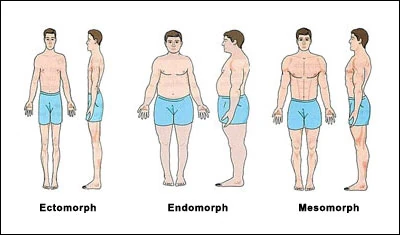
✅ i) Endomorph
- 👉 Physical Characteristics
- Soft, round body
- More body fat
- Short arms and legs
- Broad waist
- 👉 Behavioral Traits
- Calm, relaxed, friendly
- 👉 Suitable Sports
- Weightlifting
- Wrestling
- Shot put
- Easy Example
- A person who gains weight easily and has a round body shape is an Endomorph.
✅ ii) Mesomorph
- 👉 Physical Characteristics
- Muscular and well-built body
- Broad shoulders, narrow waist
- Strong bones and muscles
- 👉 Behavioral Traits
- Energetic, confident, active
- 👉 Suitable Sports
- Athletics (sprint)
- Football
- Gymnastics
- Boxing
- Easy Example
- A student with strong arms and legs and visible muscles is a Mesomorph.
✅ iii) Ectomorph
- 👉 Physical Characteristics
- Thin, lean body
- Long arms and legs
- Narrow shoulders and hips
- Less muscle and fat
- 👉 Behavioral Traits
- Quiet, sensitive, thoughtful
- 👉 Suitable Sports
- Long-distance running
- Cycling
- High jump
- Basketball
- Easy Example
- A tall, slim student who finds it hard to gain weight is an Ectomorph.
c) Summary Table: Sheldon’s Classification of Body Types
| Feature | Endomorph | Mesomorph | Ectomorph |
| Body Shape | Round, soft | Muscular, strong | Thin, lean |
| Fat | More | Moderate | Very less |
| Muscle | Less | More | Less |
| Bone Structure | Medium | Strong | Light |
| Shoulders | Narrow | Broad | Narrow |
| Waist | Broad | Narrow | Narrow |
| Weight Gain | Easy | Moderate | Difficult |
| Best Sports | Wrestling, shot put | Sprint, football | Marathon, high jump |
| Example | Heavy-built person | Strong athlete | Thin runner |
🔹Important Note
Most people are not 100% one type. They are usually a mix of two body types, like:
- Endo-Mesomorph
- Meso-Ectomorph
🔹In short:
- Body type = Natural body structure
- Sheldon classified body types into 3 types.
- Knowing body type helps in sports selection and training
Q > Hypokinetic Diseases
a) What are Hypokinetic Diseases
The word Hypokinetic comes from two Greek words:
- Hypo = less
- Kinetic = movement
Simple definition: Hypokinetic diseases are diseases caused by a lack of physical activity or movement. These diseases usually develop when a person leads a sedentary (inactive) lifestyle.
🔹 Why Hypokinetic Diseases Occur
- Sitting for long hours
- Lack of exercise
- Too much screen time (mobile, TV, computer)
- Poor lifestyle habits
Easy Example: A person who sits all day in an office and never exercises may develop health problems.
b) Common Hypokinetic Diseases
✅ i) Obesity
- Meaning: Excess accumulation of body fat due to inactivity.
- Example:
- A person eats a lot but does no physical activity and becomes overweight.
✅ ii) Diabetes (Type 2)
- Meaning: High blood sugar due to poor use of insulin.
- Example:
- Inactive lifestyle increases the risk of diabetes in adults.
✅ iii) Heart Diseases
- Meaning: Problems related to the heart and blood circulation.
- Example:
- Lack of exercise leads to weak heart muscles.
✅ iv) High Blood Pressure (Hypertension)
- Meaning: Increased pressure in blood vessels.
- Example:
- Stress and inactivity raise blood pressure levels.
✅ v) Back Pain
- Meaning: Pain in the spine due to weak muscles and bad posture.
- Example:
- Long sitting with bad posture causes lower back pain.
✅ vi) Osteoporosis
- Meaning: Weak and fragile bones due to a lack of weight-bearing activities.
- Example:
- People who do not walk or exercise may have weak bones.
✅ vii) Poor Posture
- Meaning: Incorrect body alignment due to weak muscles.
- Example:
- Slouching while sitting causes rounded shoulders.
✅ viii) Reduced Muscle Strength
- Meaning: Muscles become weak due to lack of use.
- Example:
- Inactive people find it hard to lift or move objects.
✅ xi) Stress and Anxiety
- Meaning: Mental health problems due to inactivity.
- Example:
- Exercise reduces stress, but inactivity increases it.
✅ x) Low Endurance and Fitness
- Meaning: Reduced stamina and energy.
- Example:
- Getting tired easily while climbing stairs.
c) Prevention of Hypokinetic Diseases
- Regular physical exercise
- Active lifestyle
- Balanced diet
- Good posture
- Participation in sports and recreational activities
Easy Example: Daily walking, yoga, or playing games keeps the body healthy
🔹 Role of Physical Education
- Promotes an active lifestyle
- Improves physical fitness
- Prevents lifestyle diseases
- Builds lifelong healthy habits
🔹 In short:
Hypokinetic diseases are diseases caused by a lack of physical activity, and they can be prevented by regular exercise and an active lifestyle.
Unit 3:- Philosophical Foundation of Physical Education।
Q > Idealism and Physical Education.
a) Meaning of Idealism
- Idealism is a philosophy that believes that ideas, values, mind, and spiritual development are more important than the physical world.
In simple words, idealism focuses on developing good character, moral values, and a strong mind. It believes that education should help a person become:
- Morally strong
- Mentally developed
- Spiritually balanced
Example: A student learns discipline, honesty, and respect while playing sports. This shows the influence of idealism.
🔹 Idealism in Physical Education
In physical education, idealism means that sports and games are used not only for physical fitness, but also for developing:
- Character
- Discipline
- Moral values
- Self-control
- Leadership
So, physical education becomes a way to develop both body and mind.
🔹 Example:
- During a football match, students learn:
- Fair play
- Respect for opponents
- Team spirit
- These values are part of idealism in physical education.
b) Principles of Idealism in Physical Education
✅ i) Development of Character
- Physical education should help students develop good moral character.
- Example
- A player accepts defeat politely and congratulates the winning team.
✅ ii) Importance of Discipline
- Idealism gives great importance to discipline and self-control.
- Example
- Students follow the rules of the game and the instructions of the teacher during sports practice.
✅ iii) Development of Mind and Body
- Education should develop both mental and physical abilities.
- Example
- Playing chess improves the mind, while playing athletics improves physical fitness.
✅ iv) Teacher as a Role Model
- According to idealism, the teacher should be a guide and moral example for students.
- Example
- A physical education teacher demonstrates fair play and respect during matches.
✅ v) Importance of Values in Sports
- Sports should teach important values such as:
- Honesty
- Cooperation
- Respect
- Leadership
- Example
- A cricket player admits he is out even if the umpire does not notice.
🔹 Role of Physical Education Teacher
- In idealism, the teacher plays a very important role.
- The teacher should:
- Teach discipline and good behavior
- Encourage fair play
- Promote team spirit
- Help students develop moral values
- Example
- Before a match, the teacher reminds students about sportsmanship and respect for opponents.
c) Importance of Idealism in Physical Education
- Develops moral character
- Encourages discipline and self-control
- Promotes fair play and sportsmanship
- Builds leadership qualities
- Improves mental and physical development
- Creates responsible citizens
🔹 Aims of Physical Education according to Idealism
- Character Building: PE develops honesty, discipline, and self-control.
- Moral Development: Activities teach fair play and respect.
- Mental Development: Games improve concentration and decision-making.
- Self-Discipline: Regular training builds control and responsibility.
- Spiritual Development: Yoga and meditation connect body and mind.
🔹 Example in Physical Education Class
- During a basketball match, a student accidentally fouls another player and immediately apologizes.
- The teacher appreciates the student for showing honesty and respect.
- This situation shows idealism in physical education because it promotes moral values through sports.
🔹 Conclusion
- Idealism in physical education focuses on developing good character, discipline, and moral values through sports and physical activities.
- It believes that physical education should help students become physically strong, mentally active, and morally responsible individuals.
Q > Pragmatism and Physical Education
a) Meaning of Pragmatism
Pragmatism is a philosophy that says that knowledge is gained through practical experience and real-life activities.
In simple words, pragmatism believes in learning by doing. This philosophy focuses on:
- Practical knowledge
- Experience-based learning
- Problem solving
- Useful activities in real life
Example: A student learns swimming by practicing in water, not just by reading about it in a book.
This is an example of pragmatism.
✅ Pragmatism in Physical Education
In physical education, pragmatism means students should learn skills and knowledge through practical participation in games and sports. Physical education classes should include:
- Practical activities
- Skill practice
- Real game situations
- Problem-solving during sports
Example: Students learn basketball passing techniques by practicing on the court, not just by listening to theory.
b) Principles of Pragmatism in Physical Education
✅ i) Learning by Doing
- Students learn best when they perform activities themselves.
- Example: A student understands volleyball serving by practicing the serve repeatedly.
✅ ii) Activity-Based Learning
- Education should include physical activities and practical experiences.
- Example: Instead of only explaining fitness exercises, the teacher makes students perform push-ups, running, and stretching.
✅ iii) Problem Solving
- Students learn to solve problems during games.
- Example: In football, players learn how to pass, defend, and score goals depending on the situation.
✅ iv) Social Interaction
- Pragmatism encourages teamwork and cooperation.
- Example: Team sports like cricket, hockey, and basketball help students develop cooperation and leadership skills.
✅ v) Flexible Teaching Method
- Teaching should be adapted according to students’ needs and interests.
- Example: If students enjoy badminton more than athletics, the teacher can focus more on badminton practice.
c) Role of the Physical Education Teacher
According to pragmatism, the teacher acts as a guide and organizer of activities. The teacher should:
- Encourage active participation
- Provide practical learning experiences
- Help students solve problems in games
- Create a friendly learning environment
Example: During a volleyball match, the teacher guides students on proper positioning and teamwork.
d) Importance of Pragmatism in Physical Education
- Encourages practical learning
- Improves sports skills through practice
- Develops problem-solving ability
- Promotes teamwork and cooperation
- Makes learning interesting and enjoyable
- Helps students apply skills in real-life situations
🔹 Example in Physical Education Class
- A teacher wants to teach kabaddi skills.
- Instead of only explaining rules, the teacher:
- Demonstrates the game.
- Divides students into teams.
- Allows them to play and practice the game.
- Students learn:
- Raiding techniques
- Team coordination
- Defensive strategies
- Instead of only explaining rules, the teacher:
- This is an example of pragmatism in physical education.
🔹Conclusion
- Pragmatism in physical education emphasizes learning through practical experience and active participation.
- It helps students develop physical skills, teamwork, problem-solving ability, and confidence through real sports activities.
Q > Naturalism and Physical Education
a) Meaning of Naturalism
Naturalism is a philosophy that believes that nature is the best teacher and education should follow the natural growth and development of a child.
In simple words, naturalism says that children should learn freely through natural activities and experiences.
🔹 This philosophy believes that:
- Education should be according to nature
- Children should learn through activities and experiences
- There should be freedom in learning
Example: Children learn running, jumping, climbing, and balancing naturally while playing in the playground.
🔹 Naturalism in Physical Education
- In physical education, naturalism means that students should develop their physical abilities naturally through games, sports, and outdoor activities.
- Instead of strict classroom teaching, students learn through:
- Outdoor games
- Free play
- Physical activities in natural environments
- Example
- Children playing kabaddi, kho-kho, football, or running races in the playground learn physical skills naturally.
b) Principles of Naturalism in Physical Education
✅ i) Learning Through Natural Activities
- Students learn physical skills through natural movements and activities.
- Example:
- Running, jumping, climbing trees, or playing tag games help develop strength and coordination.
✅ ii) Freedom in Learning
- Students should have the freedom to participate in activities they enjoy.
- Example
- A teacher allows students to choose between football, volleyball, or athletics practice.
✅ iii) Development According to Nature
- Education should follow the natural growth and ability of children.
- Example
Young children focus more on play activities, while older students can practice competitive sports.
✅ iv) Importance of Outdoor Activities
- Naturalism supports learning in natural environments like playgrounds, parks, and open fields.
- Example
- Morning running, hiking, and nature walks improve health and fitness.
✅ v) Physical Development is Important
- Naturalism believes physical development is essential for a healthy life.
- Example
Activities like swimming, running, and cycling help improve strength and endurance.
🔹 Role of the Physical Education Teacher
- According to naturalism, the teacher should act as a guide and facilitator, not a strict controller.
- The teacher should:
- Provide opportunities for free play
- Encourage outdoor activities
- Support natural physical development
- Create a healthy and enjoyable environment
- Example
- A teacher organizes outdoor adventure games and obstacle courses for students.
c) Importance of Naturalism in Physical Education
- Promotes natural physical development
- Encourages an active lifestyle
- Improves health and fitness
- Develops coordination and motor skills
- Increases interest in outdoor activities
- Supports mental and emotional development
🔹 Aims of Physical Education according to Naturalism
- Natural development of the body
- Development of strength, stamina, and flexibility naturally
- Growth according to interest and ability
- Development of self-expression and creativity
- Promotion of health through natural activities
🔹Example in Physical Education Class
- A teacher organizes a sports activity day in the playground where students participate in:
- Running races
- Long jump
- Tug of war
- Kabaddi
- Students enjoy playing freely and develop their strength, speed, and teamwork naturally.
- This is an example of naturalism in physical education.
🔹Conclusion
- Naturalism in physical education emphasizes learning through natural physical activities and outdoor experiences.
- It helps students develop physical fitness, coordination, and a love for sports naturally and enjoyably.
Q > Existentialism and Physical Education
a) Meaning of Existentialism
Existentialism is a philosophical theory that says that every individual is free to make his or her own choices and create meaning in life through actions and experiences.
In Simple Words, existentialism focuses on individual freedom, responsibility, and personal experience.
🔹 This philosophy believes that:
- Each person is unique
- People should make their own decisions
- Learning happens through real-life experiences
Example: A student chooses to participate in volleyball instead of football because he enjoys it more.
According to existentialism, this personal choice is important.
✅ Existentialism in Physical Education
In physical education, existentialism means giving students freedom to choose activities, express themselves, and develop their own personality through sports and physical activities.
Physical education helps students:
- Discover their abilities
- Make independent decisions
- Gain self-confidence
- Develop their own identity
b) Principles of Existentialism in Physical Education
✅ i) Freedom of Choice
- Students should have the freedom to select the sport or activity they like.
- Example:
- A teacher allows students to choose between:
- Basketball
- Volleyball
- Athletics
- A teacher allows students to choose between:
- This increases interest and motivation.
✅ ii) Individual Development
- Every student is different in ability, interest, and personality.
- Physical education should focus on personal growth rather than comparison.
- Example: A student may not be good at running but may be excellent in yoga or badminton.
✅ iii) Learning Through Experience
- Existentialism believes that real experience is the best teacher.
- In physical education, students learn by playing games, practicing skills, and facing challenges.
- Example
- A student learns teamwork and leadership by playing football matches.
✅ iv) Self-Responsibility
- Students must take responsibility for their actions and performance.
- Example
- If a student wants to improve in the long jump, he must practice regularly.
✅ v) Self-Expression
- Sports and physical activities allow students to express themselves freely.
- Example
- Gymnastics, dance, and yoga allow students to show creativity and personal style.
c) Role of Physical Education Teacher
- According to existentialism, the teacher should act as a guide or facilitator, not a strict controller.
- The teacher should:
- Encourage independent thinking
- Provide different activity options
- Motivate students to discover their abilities
- Support personal development
- Example: A PE teacher allows students to create their own warm-up routine.
🔹 Importance of Existentialism in Physical Education
- Develops self-confidence
- Encourages independent decision-making
- Improves personal responsibility
- Promotes creativity in sports
- Helps students discover their interests and talents
- Builds leadership qualities
- Increases motivation in physical activity
🔹 Practical Example in Physical Education Class
- A PE teacher organizes a sports activity session where students can choose:
- Volleyball
- Basketball
- Yoga
- Athletics
- Each student participates in the activity they enjoy most.
- This makes them more active, confident, and responsible for their learning.
- This is an example of existentialism in physical education.
🔹 Aims of Physical Education according to Existentialism
- Self-realization
- Development of individual identity
- Freedom of choice in activities
- Development of confidence and independence
- Emotional and mental growth
🔹 Conclusion
- Existentialism in physical education focuses on individual freedom, personal choice, and self-development.
- It encourages students to learn through experience, express themselves, and take responsibility for their actions.
- Therefore, this philosophy helps students develop physical fitness, confidence, and a strong personality.
Q > Sports for All and Its Role in the Maintenance and Promotion of Fitness
a) Meaning of Sports for All
Simple Meaning: Sports for All means sports and physical activities for everyone, regardless of:
- Age (children, adults, elderly)
- Gender
- Ability or disability
- Skill level
- Social or economic background
Simple Definition: Sports for All is a concept that encourages every person to take part in physical activities for health, enjoyment, and fitness, not only for competition.
🔹 Philosophy of Sports for All
- Sports are a basic human need
- Everyone has the right to play
- Participation is more important than winning
- Health and happiness are the main goals
🔹 Difference Between Competitive Sports and Sports for All
| Competitive Sports | Sports for All |
| Only trained athletes | Open to everyone |
| Focus on winning | Focus on participation |
| High pressure | Enjoyment and health |
| Elite level | Mass level |
b) Role of Sports for All in Maintaining Fitness
✅ i) Improves Physical Fitness
- Increases strength, stamina, and flexibility
- Example: A morning walk keeps the body active.
✅ ii) Maintains Healthy Body Weight
- Burns calories and prevents obesity
- Example: Playing badminton helps control weight.
✅ iii) Improves Heart and Lung Fitness
- Strengthens the cardiovascular system
- Example: Cycling improves heart health.
✅ iv) Keeps Muscles and Bones Strong
- Regular activity prevents weakness and osteoporosis.
- Example: Skipping strengthens leg bones.
✅ v) Improves Flexibility and Mobility
- Keeps joints flexible and reduces stiffness
- Example: Yoga improves body flexibility.
c) Role of Sports for All in Promoting Fitness
✅ i) Reduces Lifestyle Diseases
- Prevents diabetes, BP, and heart diseases
- Example: Daily jogging controls blood sugar.
✅ ii) Improves Mental Health
- Reduces stress, anxiety, and depression
- Example: Playing games refreshes the mind.
✅ iii) Develops Social Fitness
- Builds friendship and cooperation
- Example: Group games encourage teamwork.
✅ iv) Encourages Lifelong Physical Activity
- Builds active habits from childhood
- Example: Children who play daily remain active adults.
✅ v) Improves Quality of Life
- Makes life active, joyful, and healthy
- Example: Elderly people doing light exercise feel energetic.
✅ Examples of Sports for All Activities
- Walking and jogging
- Yoga and meditation
- Recreational games
- Cycling
- Swimming
- Community sports events
- Traditional games
d) Importance of Sports for All
- Healthy society
- Reduced medical expenses
- Increased productivity
- Happy and active life
- Improves health and physical fitness
- Reduces disease risk
- Promotes mental well-being
- Encourages social unity
- Develops healthy habits
- Increases life expectancy
- Creates a fit and active society
🔹 Role of Physical Education Teacher
- Creates awareness about fitness
- Encourages mass participation
- Organizes community and school programs
- Motivates inactive people
🔹 Easy Example
- In a village or school:
- Children play games
- Adults walk in the morning
- Elderly people do yoga
- Everyone participates according to their ability.
- This is Sports for All, helping to maintain and promote fitness.
🔹 In short: Sports for All promotes fitness by encouraging everyone to participate in physical activities for health, enjoyment, and lifelong well-being, not just competition.
Unit 4:- Psychosocial Foundation
Q > Learning
a) Introduction of Learning
Meaning of Learning: Learning is a process by which a person gains knowledge, skills, habits, or attitudes through experience and practice.
Simple Definition: Learning is a permanent change in behaviour due to practice and experience.
Learning in Physical Education: In Physical Education, learning mainly happens through:
- Practice
- Repetition
- Experience
Example: A student cannot throw a ball properly at first, but after daily practice, the throw improves. This improvement is called learning.
b) Theories of Learning
Learning theories explain how learning takes place.
✅ i) Trial and Error Theory (Thorndike)
- Meaning: Learning occurs by repeated attempts until success is achieved.
- Example in PE: A student tries many times to serve in badminton. After errors and corrections, the serve becomes accurate.
✅ ii) Classical Conditioning Theory (Pavlov)
- Meaning: Learning happens by association.
- Example in PE: The whistle sound makes students stop playing immediately because they associate the whistle with instruction.
✅ iii) Operant Conditioning Theory (Skinner)
- Meaning: Learning depends on reward and punishment.
- Example in PE: A coach praises a student for good performance, motivating the student to perform better.
✅ iv) Insight Learning Theory (Gestalt Theory)
- Meaning: Learning happens by understanding the situation, not by trial and error.
- Example in PE: A player understands opponent movement and suddenly learns the correct passing technique.
c) Laws of Learning (Thorndike)
✅ i) Law of Readiness
- Meaning: Learning occurs best when the learner is mentally and physically ready.
- Example: A warm-up prepares students to learn skills better.
✅ ii) Law of Exercise
- Meaning: Practice strengthens learning.
- Example: Daily dribbling improves basketball control.
✅ iii) Law of Effect
- Meaning: Responses followed by satisfaction are learned better.
- Example: Winning a game motivates players to practice more.
🔹 Secondary Laws (Brief)
- Law of Motivation: Motivation increases learning
- Law of Feedback: Correct feedback improves performance
- Law of Transfer: Skills learned in one activity help in another
d) Motor Learning
Meaning of Motor Learning: Motor learning is the process of learning physical movements and skills through practice.
Simple Definition: Motor learning is the permanent improvement in movement ability due to practice.
🔹 Stages of Motor Learning
✅ i) Cognitive Stage
- The learner understands the skill
- Many mistakes occur
- Example: Learning the rules and steps of the volleyball serve.
✅ ii) Associative Stage
- Fewer mistakes
- Better coordination
- Example: Serve becomes more accurate with practice.
✅ iii) Autonomous Stage
- Skill becomes automatic
- High confidence
- Example: Player serves correctly without thinking.
✅ Importance of Motor Learning in PE
- Skill development
- Performance improvement
- Confidence building
- Injury prevention
✅ Easy Example of Motor Learning
Learning to ride a bicycle:
- First – many falls (cognitive stage)
- Practice – better balance (associative stage)
- Riding easily – without thinking (autonomous stage)
✅ In short: Learning in Physical Education happens through practice, experience, and motivation, and motor learning helps in mastering physical skills.
Q > Social bases
a) Social Organization
Meaning Social Organisation: Social organization refers to the way people are structured in society and how they interact and cooperate with each other.
Simple Definition: Social organization is the arrangement of people into groups and roles to work together and achieve common goals.
🔹 Importance of Physical Education
- Organizes students into teams, clubs, and groups
- Helps in cooperation, teamwork, and discipline
- Makes sports and activities manageable
🔹 Easy Example
- A school forms football, volleyball, and cricket teams.
- Each team has a captain, players, and a coach.
- This is a social organization in sports.
b) Socialization through Sports
Meaning: Socialization is the process by which individuals learn to interact, behave, and communicate in society.
Simple Definition: Sports teach people how to behave, cooperate, and follow rules in society.
🔹 How Sports Promote Socialization
- Teamwork: Players learn to work together
- Discipline: Following rules and schedules
- Respect: Respecting teammates, opponents, and referees
- Communication: Learning to communicate effectively
- Cooperation: Sharing responsibility
🔹 Easy Example
- In a basketball game:
- Students pass the ball, plan strategies, and cheer teammates
- They learn cooperation, communication, and respect
- This is socialization through sports.
c) Social Group, Social Change, and Social Value
✅ i) Social Group
- Meaning: A social group is a set of people who interact regularly, share common goals, and have a sense of belonging.
- Simple Definition: Social group = People together with common interests and relationships.
- Example in PE:
- A football team or a yoga club
- They train together, help each other, and share goals
✅ ii) Social Change
- Meaning: Social change is the modification or transformation of society over time.
- Simple Definition: Social change = Changes in the way people live, interact, or behave.
- Example in PE:
- Women participating in football and cricket (earlier, only men played)
- Introduction of inclusive sports for disabled athletes
✅ iii) Social Value
- Meaning: Social values are the accepted standards of behavior, ethics, and norms in society.
- Simple Definition: Social values = Beliefs about what is right, good, and important in society.
🔹 Role of Sports in Teaching Values
- Fair play → Honesty and integrity
- Respect → Politeness towards teammates and opponents
- Team spirit → Cooperation and unity
- Discipline → Following rules and schedules
🔹 Example:
- In a school volleyball match, students shake hands before and after the game.
- This teaches respect, fairness, and discipline.
c) Summary Table: Social Concepts in Sports
| Concept | Meaning | Example in Sports |
| Social Organization | Arrangement of people into groups & roles | A football team with a captain, a coach, and players |
| Socialization | Learning to interact in society | Playing basketball teaches teamwork & cooperation |
| Social Group | People with common goals & interaction | Yoga club or school cricket team |
| Social Change | Transformation in society | Women playing football or inclusive games |
| Social Values | Accepted standards of behavior | Fair play, respect, and discipline in games |
✅ In short: Sports are not only for fitness and fun but also teach social organization, values, teamwork, respect, and prepare individuals to function well in society.